Dr.'s Blog
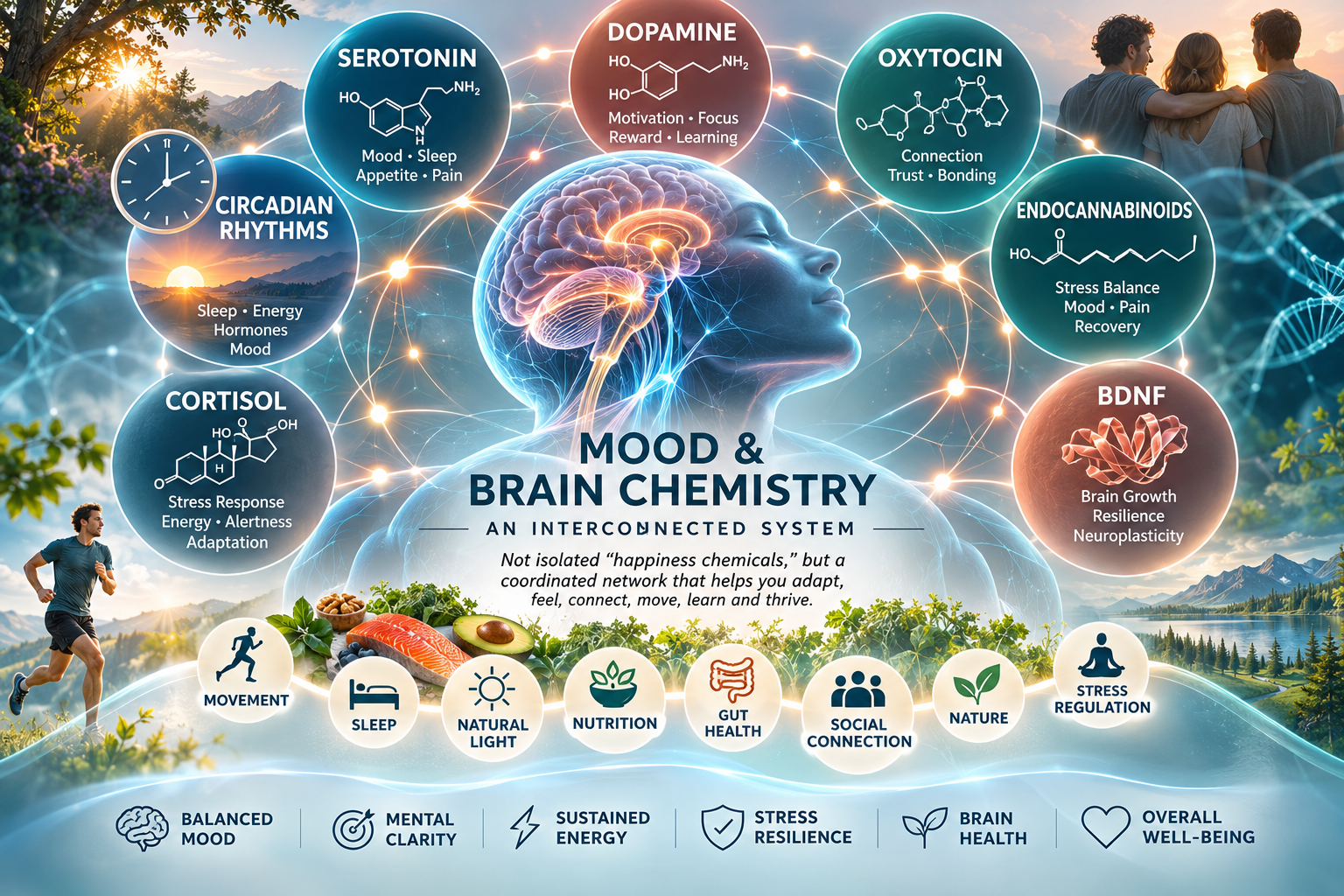
How Do You Naturally Boost Serotonin, Dopamine, Oxytocin and Endorphins?
November 18, 2026
How Do You Naturally Boost Serotonin, Dopamine, Oxytocin and Endorphins? Diving into the Research and Creating Real-Life Applications.
In this article:
- Why “happiness chemicals” is a useful idea and an incomplete one
- Serotonin: the gut story most people get wrong
- Dopamine: it’s about drive, not pleasure
- Oxytocin: connection matters more than the chemical
- Endorphins: the runner’s high plot twist
- What I see in practice
- The big levers: sleep, light and food
- Supplements: what to be careful with
- Where chiropractic fits (honestly)
- Your action steps
- FAQ
You’ve probably seen the chart (well… maybe if you’re a nerd like me;). Four “happiness chemicals” (serotonin, dopamine, oxytocin, endorphins), each with a neat list of habits and supplements to “boost” it. If you’ve been feeling flat, unmotivated, wired but tired, or just not like yourself, I get the appeal. It’s tempting to want a button. The quick, easy fix. Boost the serotonin, fix the dopamine, done.
And sometimes… that’s great! Natural ways to leverage these factors can be great.
But find sustainable ways where you’re addressing some of these things without even knowing it, would be ideal.
Honestly, I love that people are asking these questions, because they’re the right ones. But the research tells a more interesting story, and a more hopeful one. Your brain isn’t running on four tanks you need to top off. These are signaling systems, and they respond to how you sleep, move, eat, connect and recover. Health depends less on maximizing any one chemical and more on creating the conditions where your nervous system can regulate itself.
That’s the same thing I tell patients every day: You’re not broken. You’re built to heal.
Why “Happiness Chemicals” Is Useful, and Incomplete
Here’s a reality check. A systematic review of 91 studies found only possible but small roles for serotonin, cortisol and inflammatory markers in explaining differences in well-being, and inconsistent results for the other markers (de Vries et al., Neuroscience & Biobehavioral Reviews, 2022). cas
These chemicals matter. But human happiness can’t be reduced to one number on a lab report. Each label on that chart is a simplification, so let’s go through them one at a time.
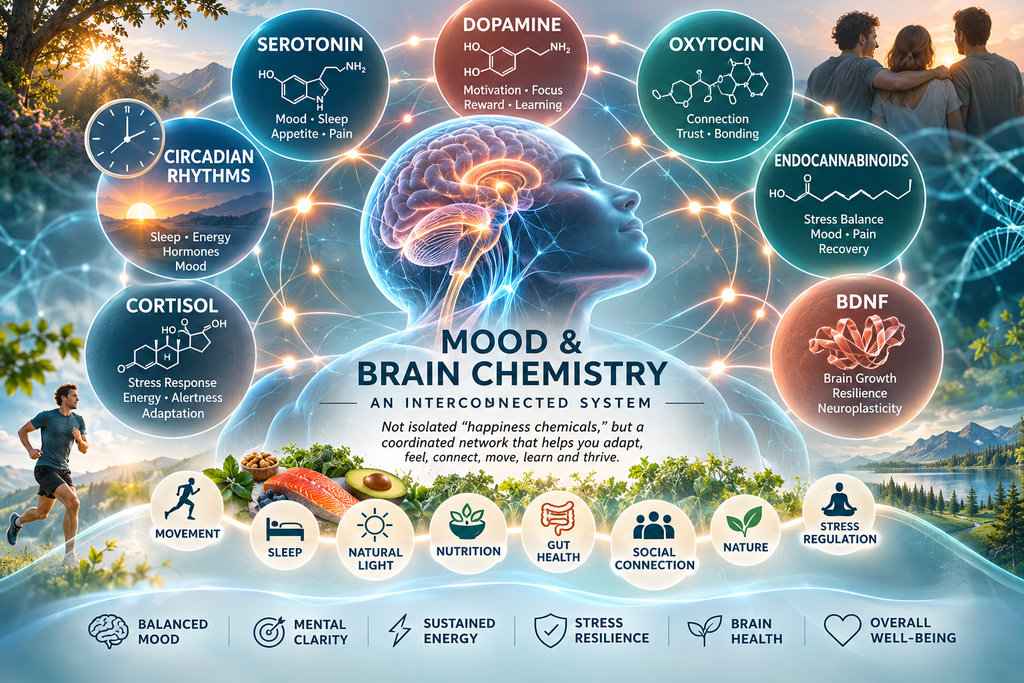
Serotonin: The Gut Story
Serotonin does far more than “make you happy.” It’s involved in mood, sleep, satiety, pain modulation and gut motility. And the popular idea that depression is simply a serotonin shortage has taken a beating. A 2022 umbrella review found no consistent evidence that depression is caused by lowered serotonin activity or concentrations (Moncrieff et al., Molecular Psychiatry, 2022). To be fair, that review was heavily challenged. A 35-scientist commentary argued the evidence clearly indicates the serotonin system is implicated in depression (Jauhar et al., Molecular Psychiatry, 2023). synapsesocialpsychiatrymargins
So where does that leave us? Serotonin matters, but depression isn’t the neurological equivalent of an empty gas tank. It involves stress circuitry, inflammation, sleep, genetics, environment and more. (If you take an antidepressant, this is NOT medical advice to change it on your own. But, it is a good thing to question and research! Talk to your prescriber.)
Now the part I think is genuinely cool. You’ve probably heard that 90% of your serotonin is made in your gut. That’s true. “Enterochromaffin cells” in the intestinal lining produce about 90% of the body’s serotonin, and that serotonin can’t cross the blood-brain barrier, so the gut and brain pools stay separate. So “healthy gut, more serotonin in my brain” isn’t how it works. nih
Your gut still talks to your brain, just through other routes: tryptophan availability, microbial metabolites, inflammatory signaling and the vagus nerve (we LOVE talking about the vagus nerve in chiropractic!). And your microbes matter for the gut side of it. Spore-forming bacteria from mouse and human microbiota promote serotonin production from colon enterochromaffin cells (Yano et al., Cell, 2015). Much of the gut-to-brain mapping is still being worked out, so I’m not going to oversell it. dp
One more thing most “boost your serotonin” lists skip: tryptophan has to compete with other amino acids to get into the brain, and making serotonin takes more than tryptophan. Iron and vitamin B6, for example, are part of the machinery. Eating turkey won’t flip a switch, but nutrient status does set the limits of what your biochemistry can do.
Dopamine: It’s About Drive
Dopamine gets called the “pleasure chemical,” but neuroscience paints a different picture. It’s heavily involved in motivation, effort, learning, reward prediction and whether something feels worth working for.
That’s why checking something off your list feels good. Your brain learns goal, then effort, then accomplishment, then reward, and that loop reinforces behaviors worth repeating. Setting achievable goals, learning a skill, training and finishing hard things are all ways of working with that circuitry.
Modern life offers endless low-effort reward cues: scrolling, notifications, gambling-style apps, hyper-palatable food. The “dopamine detox” idea is an interesting concept, and there are some good things to take away from it, but it’s not the full picture and not how neurobiology works. A better question is: what behaviors am I teaching my brain are worth pursuing?
And a practical note. Sometimes “low motivation” isn’t a mindset problem. Dopamine synthesis needs raw materials like protein and iron. If someone is exhausted and unmotivated, that’s a good reason to look at sleep, nutrition and proper lab work, not just try harder.
Oxytocin: Connection Matters More Than the Chemical
Oxytocin is called the “love hormone,” but human research is messier than the label. A meta-analysis pooling 51 studies (3,741 participants) found that social interaction did not produce the expected hormonal response in causal designs (Burenkova et al., Psychological Bulletin, 2023). That doesn’t mean connection doesn’t matter. It means measuring oxytocin in blood or saliva doesn’t necessarily tell us what’s happening in specific brain circuits. x-mol
What we do know about connection is striking. Across 148 studies and 308,849 participants, people with stronger social relationships had a 50% greater likelihood of survival, an influence comparable to well-established mortality risk factors (Holt-Lunstad et al., PLoS Medicine, 2010). byu
So don’t chase oxytocin. Build relationships. Touch, real conversation, family, friends, faith community, even time with pets!
One flag, since the chart lists L. reuteri probiotics here. The research is fascinating. L. reuteri was shown to stimulate oxytocin secretion from human intestinal tissue and organoids, and it supports normal social behavior in mice (Danhof et al., Gut Microbes, 2023). But this hasn’t been tested as a bonding or mood supplement in people, so I wouldn’t build a protocol on it yet. Interesting mechanism, not ready for a blanket recommendation. doaj
Endorphins: The Runner’s High Plot Twist
If you’ve ever finished a hard CrossFit workout or a hockey game and felt that strange calm afterward, you know the feeling. For decades the explanation was endorphins. It’s not that simple.
In a randomized, double-blind study of 63 adults, running increased euphoria and reduced anxiety compared to walking (Siebers et al., Psychoneuroendocrinology, 2021). Then researchers blocked opioid receptors with naltrexone. The euphoria and anxiety reduction still happened, and the endocannabinoids anandamide and 2-AG rose with running. nihunipa
Your body makes its own cannabinoid-like molecules, and they’re now a leading candidate for the runner’s high. To keep it honest, a 2023 review counted 14 of 17 studies showing higher endocannabinoids after a single exercise bout, but concluded that proof of their role in humans isn’t established yet (Siebers et al., The Neuroscientist, 2023). The best read is that exercise changes a whole network of brain chemistry, not one molecule. getfitcraft
And the mood benefits of exercise are well documented. An overview of 97 reviews covering 1,039 trials and 128,119 participants found physical activity improved depression, anxiety and distress (Singh et al., British Journal of Sports Medicine, 2023). The authors noted the effects were comparable to or slightly greater than those seen with psychotherapy and medication. Most of the evidence was in mild to moderate depression. sciencedaily.com +2
Struggling with movement because of pain, stiffness or an injury? That’s often where we can help. [Schedule your visit here: calendly.com/drjustinlee/onlineschedule]
What I See in Practice
A lot of the people who come see me for pain aren’t only dealing with pain. They’re sleeping poorly, moving less, more stressed, and pulling back from the things they used to enjoy. Chronic pain changes the whole environment your nervous system is working in.
When someone starts moving better and hurting less, I often see sleep, training and mood follow. That makes sense to me. But just being real, I’m not going to tell you an adjustment “releases a happy chemical,” and I’ll explain why below.
The Big Levers: Sleep, Light and Food

Light. Morning daylight anchors your circadian rhythm, which influences melatonin, cortisol timing, alertness and mood circuitry. There’s clinical data on bright light too, with a caveat. In a meta-analysis of 11 trials and 858 patients with nonseasonal depression, remission was 40.7% with bright light therapy versus 23.5% in controls (Menegaz de Almeida et al., JAMA Psychiatry, 2025). Those trials used light boxes producing 10,000 lux for at least 30 minutes daily, so this is a clinical protocol used as an add-on to treatment, not proof that stepping outside once will fix things. Still, for those of us in a Minnesota winter, getting real light early in the day is worth prioritizing. nihmdedge
Movement: The Most Powerful “Supplement” You Have
Movement is the one with the broadest reach. It changes your sleep, your stress physiology, your confidence and your brain chemistry all at once, and you can start today.
Resistance training deserves more credit than it gets. A meta-analysis of 33 clinical trials with 1,877 participants found that resistance training significantly reduced depressive symptoms, with a moderate-sized effect (Gordon et al., JAMA Psychiatry, 2018), and the benefit held regardless of health status, total volume of training, or strength gains. To keep it honest, the reductions were smaller in trials with blinded allocation or assessment, but the direction is encouraging. 2018 gordon +2
Here’s what the national guidelines recommend:
→ Aerobic work: At least 150 to 300 minutes a week of moderate-intensity activity, like brisk walking
→ Strength work: Muscle-strengthening activity, such as lifting weights or push-ups, at least two days a week healthhealth
You don’t need a perfect program, just one you’ll actually do. Lift two or three times a week, walk every day, and add something that makes you work and brings you joy, whether that’s pickup hockey, a CrossFit class or a hard hike. If pain is what’s stopping you, hold that thought, because it’s the bridge to the chiropractic section below.
Sleep: Where Everything Gets Rebuilt
Sleep is when your brain and body recover. When it’s off, everything above gets harder. Here are the levers you actually control.
→ Keep a consistent schedule: Same wake time, seven days a week, anchored with morning light.
→ Watch your caffeine timing: In a small study of 12 healthy sleepers, 400 mg of caffeine (about 2 to 3 cups of coffee) taken even six hours before bed cut total sleep time by more than an hour, and participants weren’t aware of it (Drake et al., Journal of Clinical Sleep Medicine, 2013). That means your afternoon coffee may be costing you more than you notice.
→ Rethink the nightcap: A review of lab studies found alcohol at all doses shortens the time to fall asleep but increases sleep disruption in the second half of the night, and moderate to high doses reduce total REM sleep (Ebrahim et al., Alcohol Clin Exp Res, 2013). It gives the impression of better sleep without the real thing.
→ Dim the evenings and cool the room: Treat the last hour before bed as a wind-down, not more input.
→ If you’re stuck, there’s a proven option: The American College of Physicians recommends cognitive behavioral therapy for insomnia (CBT-I) as the initial treatment for chronic insomnia disorder (Qaseem et al., Annals of Internal Medicine, 2016). Ask your doctor about it. sleepeducation.org +2
Also pay attention to whether pain, stiffness or neck and back discomfort is what’s keeping you up. That’s another thread worth pulling.
Stress: Train the Shift From “Go” to “Recover”
We program rest days for athletes because adaptation happens during recovery. Your nervous system works the same way. Chronic stress keeps it in “go” mode, and the good news is that you can train the shift.
Breathing. In a randomized trial, people did five minutes of daily breathwork for one month, and the exhale-focused practice called cyclic sighing improved mood and lowered respiratory rate more than an equivalent period of mindfulness meditation (Balban et al., Cell Reports Medicine, 2023). The technique is two quick inhales through the nose, then one long, slow exhale through the mouth. Five minutes is all it takes. stanford
Time outside. In a survey of 19,806 adults in England, spending at least 120 minutes a week in nature was associated with greater odds of reporting good health and well-being, and it didn’t matter whether it came in one long visit or several shorter ones (White et al., Scientific Reports, 2019). It’s self-reported and observational, but it’s an easy target, even on a cold Minnesota walk with the right layers. physiciansweekly
Connection and meaning. Relationships, prayer or meditation, and time doing things you love all count as stress management, and they’re not “extra.”
Protect your recovery. Schedule downtime the way you’d schedule a workout. Your nervous system needs it.
Food. Real food gives your brain its raw materials. On the other side of the ledger, a meta-analysis of six prospective studies found high versus low ultra-processed food intake was associated with a 1.32 hazard ratio for depressive outcomes (Werneck et al., Clinical Nutrition, 2024). That’s an association, and the design doesn’t allow causal conclusions. The flip side is encouraging. In the SMILES trial, remission at 12 weeks was 32.3% in the diet-support group versus 8.0% in the social-support control group (Jacka et al., BMC Medicine, 2017). That was a small trial of 67 people, so it’s promising rather than definitive. Advanced search +3
Nutrition: Build the Plate Your Brain Needs
I tell patients to think about adding before subtracting. When your plate is built well, there’s a lot less room for the stuff that works against you. Think of every meal as protein, color, healthy fat and fiber.
Foods that help:
→ Fatty fish (salmon, sardines, mackerel, anchovies): Your best food source of EPA and DHA. In a pooled analysis of 24 cohorts, fish and vegetable intake were each associated with lower odds of depressive symptoms (odds ratios of 0.86 and 0.82) (Molendijk et al., Journal of Affective Disorders, 2018).
→ Vegetables and fruit, in color: A meta-analysis found the highest fruit intake was linked to a 17% lower depression risk in cohort studies (RR 0.83), and vegetables to a 14% lower risk (Saghafian et al., British Journal of Nutrition, 2018). Leafy greens bring folate and magnesium, and berries bring polyphenols.
→ Protein at every meal (eggs, poultry, meat, Greek yogurt, legumes): Your brain builds its neurotransmitters from the amino acids in protein. Pasture-raised meats and dairy would be ideal!!
→ Fermented foods (yogurt, kefir, sauerkraut, kimchi): In a 10-week trial, 36 healthy adults were randomly assigned to eat either fermented or high-fiber foods, and the fermented-food diet increased microbiome diversity and lowered inflammation (Wastyk et al., Cell, 2021). It’s a small study in healthy people and didn’t measure mood, but it’s an encouraging signal for your gut-brain terrain.
→ Nuts, seeds, legumes and whole grains: These are the fiber that feeds your gut microbes, and they’re core to the Mediterranean-style pattern behind the SMILES trial results above.
→ Olive oil and herbs: The easiest healthy-fat swap in your kitchen. scholarlypublications.universiteitleiden.nl +2
Gut Health is SO Important
Your gut and brain are in constant conversation. This two-way communication is called the gut-brain axis, and it runs through the vagus nerve, your immune system, and the compounds your gut microbes produce. You’ve probably heard that about 90% of your body’s serotonin is made in the gut. That’s true, but that serotonin doesn’t cross into the brain, so a healthy gut doesn’t directly “fill up” your brain’s supply. What your gut does is shape the conversation: it influences inflammation, helps determine how your body handles tryptophan (the raw material for serotonin), and sends signals up to the brain. Gut microbes even help regulate how much serotonin the gut itself produces (Yano et al., Cell, 2015). That’s why I like starting with food. In a 10-week trial, healthy adults eating more fermented foods like yogurt, kefir and sauerkraut saw increased microbiome diversity and lower inflammation markers (Wastyk et al., Cell, 2021). Researchers are still mapping exactly how all of this affects mood, and I wouldn’t reach for a “mood probiotic” just yet, because the benefits seem to depend on the specific strain. But feeding your gut well with plenty of plants, fiber and fermented foods is a simple step you can take today.
Personally, I would make sure you’re consuming plenty of nutrient dense foods! (Instead of nutrient-void foods)
This will naturally garnish a lower-inflammatory diet and plenty of health-promoting nutrients that your gut and brain require for optimal function.
Foods that work against you:
→ Added sugar and sweetened drinks: In the long-running Whitehall II study, men in the highest third of sugar intake from sweet foods and drinks had 23% higher odds of developing a common mental disorder over five years, and that was more than 67 grams a day versus under 39.5 grams (Knüppel et al., Scientific Reports, 2017). The researchers checked whether low mood was driving people to eat more sugar and didn’t see it in the data. They also found no link between sugar intake and new mood disorders in women, so it’s an association worth taking seriously, not a verdict.
→ Ultra-processed foods: The research we covered above points the same direction. The simplest rule is to eat food that looks like food.
→ Alcohol: It may help you fall asleep faster, but it costs you later in the night. More on that in the sleep section below. s41598 017 05649 7 +2
Here’s my take: a donut isn’t bad, but one every day for years is. Don’t aim for perfect. Aim for a plate that’s mostly real food, most of the time.
Supplements That Can Help (Use Them Smartly!!)
Food, movement, sleep and stress come first, because supplements work best as support, not as a substitute. But used well, they can fill real gaps. Here’s where I’d look.
Omega-3s (EPA-predominant). This is one of the better-studied options. A meta-analysis of 26 double-blind trials with 2,160 participants found an overall beneficial effect of omega-3s on depression symptoms, and the benefit appeared in formulations with at least 60% EPA at a dose of 1 gram a day or less (Liao et al., Translational Psychiatry, 2019). That tells you to read the label for EPA content, not just the “fish oil” total. Fatty fish is still the first move, and your provider can help you with dosing. unboundmedicinenih
Magnesium. Magnesium is a cofactor in more than 350 enzymes, most of them important for brain function. A 2023 meta-analysis of seven clinical trials with 325 people found a significant decline in depression scores with magnesium supplementation (Moabedi et al., Frontiers in Psychiatry, 2023). It’s a small pool of studies, and the authors call for larger, higher-quality trials. Many people don’t get enough from diet, so pumpkin seeds, leafy greens, nuts and legumes are worth building in either way. pmc.ncbi.nlm.nih.gov +3
Vitamin D: test, don’t guess. In the VITAL-DEP trial, more than 18,000 adults aged 50 or older took vitamin D3 or placebo for an average of five years, with no significant difference in depression risk (Okereke et al., JAMA, 2020). But most participants in both groups had adequate vitamin D at baseline, so the trial can’t tell us what happens if you’re low. For those of us in Minnesota winters, checking your level and correcting a true deficiency is smart. If you’re already sufficient, more isn’t magic. technologynetworksreliasmedia
The “check, don’t guess” group: iron, B12, B6, folate and zinc. These are part of your brain’s neurotransmitter machinery, and deficiencies are common enough to be worth ruling out, especially for menstruating women, endurance athletes, vegetarians and vegans, and anyone with digestive issues. This is exactly where functional lab testing earns its keep. Correct what’s low, with no blind megadosing.
Quality and safety. Look for third-party tested products, and tell your doctor or pharmacist what you take. Some popular “mood” supplements, like St. John’s wort and 5-HTP, interact with medications, so take these into consideration.
The supplements I recommend to my patients would only be sourced from the highest quality products possible. Other cheaper forms
Supplements: What to Be Careful With
A chart can list a supplement under a chemical because there’s a plausible mechanism or a small study. That’s very different from showing it reliably changes that chemical, or your mood, in people. A few worth knowing about:
→ St. John’s wort: It can limit the effectiveness of many prescription medicines, and combining it with certain antidepressants can cause a potentially life-threatening rise in serotonin. NCCIH also notes it isn’t consistently effective for depression.
→ 5-HTP: This directly supplies a serotonin precursor. Natural doesn’t mean interaction-free, especially if you take any serotonin-affecting medication.
→ Mucuna pruriens: It naturally contains L-DOPA, the same molecule used in Parkinson’s medication. That’s very different from “set goals and exercise” as a dopamine strategy. Don’t casually stack it. nihnih
Where I’d actually start is correcting true deficiencies (vitamin D, iron, B12, B6, folate, magnesium, zinc), ideally with proper lab work rather than guesswork or megadosing. Before adding anything that changes brain chemistry, talk with your doctor or pharmacist, especially if you take medications.
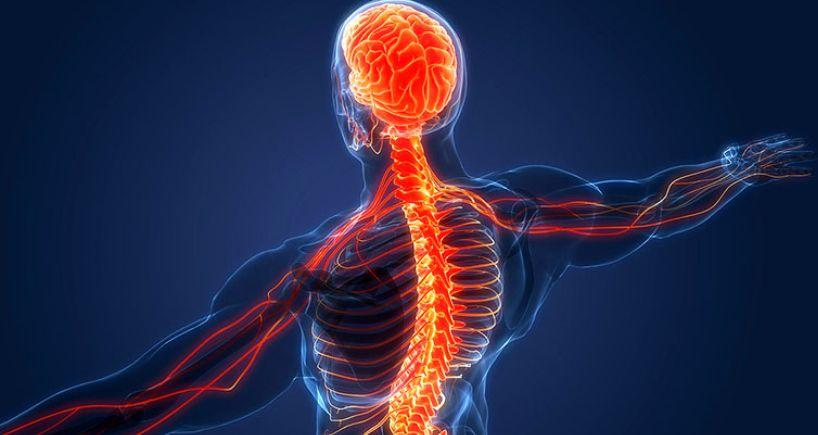
What about your nervous system??
It’s tempting to just simply state that chiropractic adjustments are an immediate boost to your neurotransmitters. And, there is some interesting research out there that may lead to this… but much more needs to be done to be conclusive. We see it ALL the time in the office how getting adjust can dramatically improve your mood and overall outlook on life. We literally hear about it on a weekly basis!! Research simply has to catch up. It’s a tough thing to study. Even the medical world doesn’t have a perfect approach. A systematic review update of 15 trials with 737 participants found low-quality evidence that spinal manipulation may affect cortisol right after treatment, and very low-quality evidence of no effect on substance P, oxytocin and several other markers (Kovanur Sampath et al., Journal of Manual & Manipulative Therapy, 2024). nihomicsdi
Yep, as honest as I can be about that.
But, we’ll get there!
Where Chiropractic Fits: Removing Interference
Quite honestly — absolute game changer in my practice!! We hear testimonials regarding these type of changes every week in the office. Helping people regulate their nervous systems and overall health is such a blessing… and we get to see the impact on a regular basis.
Everything above gets easier when your body works well. Pain steals sleep, makes movement miserable, and keeps your nervous system stuck in a protective state. That’s where I come in.
My approach starts with understanding why you hurt, not just chasing the symptom. That means a thorough consultation, a functional assessment, and digital X-rays so we can see your alignment and posture. From there I build an individualized plan that combines adjustments with home care exercises, and it works alongside the nutrition, movement, sleep and stress habits above, not instead of them.
There’s also interesting research on how the nervous system responds to spinal manipulation. In a study of 19 people with subclinical pain, each volunteer attended two sessions, one with spinal manipulation and one control, in random order. The researchers concluded that a single session of spinal manipulation of dysfunctional segments altered somatosensory processing at the cortical level, particularly within the prefrontal cortex (Lelic et al., Neural Plasticity, 2016). That’s a measure of how the brain processes information from the body, and it’s the premise behind our care. It isn’t a mood or hormone study, and research on specific chemical changes after adjustments is still early and mixed, so I’m not going to promise that. What I can say is that improving how your spine and nervous system function can help you move, train and sleep better, and that supports everything else. emarefaaut
The credible connection is different. Pain, poor movement and poor sleep all push your nervous system toward a stressed, protective state. Corrective chiropractic care aims to improve how your spine and nervous system function mechanically and neurologically, so you can move, train and sleep. Paired with individualized home care exercises, that can influence many of these systems indirectly and meaningfully, without claiming one adjustment releases one happy chemical.
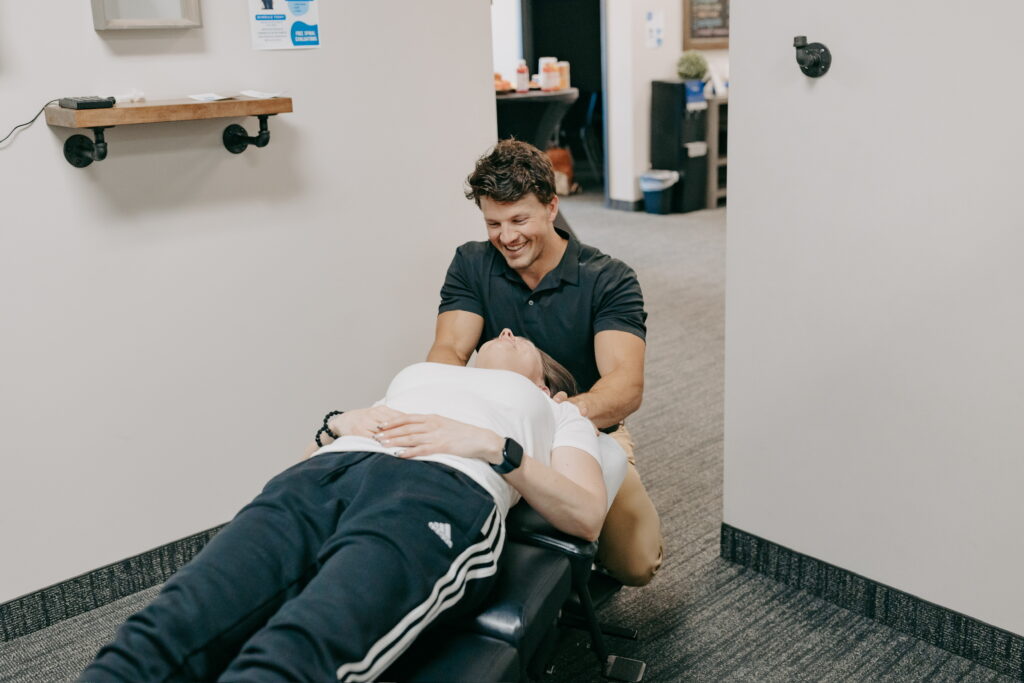
What we see in practice??
People’s overall mood and outlook on life change for the better all the time!! It’s far easier to workout when you’re feeling and moving better.
Your Action Steps: Don’t Chase the Chemical, Build the Environment
→ Move most days: include both resistance training and aerobic work
→ Get bright light early, and keep evenings dimmer: protect your circadian rhythm
→ Protect your sleep: aim for a consistent schedule and enough hours
→ Eat for your brain: protein, fatty fish, colorful plants, fiber, and fewer ultra-processed foods
→ Check for real deficiencies: iron, vitamin D, B vitamins, magnesium and zinc, with proper labs
→ Invest in relationships: touch, conversation, family, friends, faith, community, pets
→ Pursue earned goals: challenges with effort and a finish line beat frictionless scrolling
→ Practice down-regulating: slow breathing, prayer or meditation, time in nature, real recovery
→ Reduce avoidable exposures: nicotine, excess alcohol, and heavy solvent or pesticide exposure when you can
FAQ
Can I really boost serotonin naturally?
You can create conditions that support healthy serotonin signaling: consistent sleep, daylight, exercise, enough protein and key nutrients, and lower chronic stress. But “boost” is the wrong mental model, because it’s a system that needs to work well, not a tank to overfill. And if you’re dealing with persistent low mood, that’s worth a real conversation with a professional, not just a supplement.
Does eating turkey or other tryptophan foods make me happier?
Not on its own. Tryptophan has to compete with other amino acids to reach your brain, and building serotonin takes cofactors like iron and B6 too. Food quality and overall nutrient sufficiency matter far more than any single “serotonin food.”
Is a “dopamine detox” legit?
Taking a break from constant low-effort stimulation can be a healthy habit, but “detoxing” dopamine isn’t really how the brain works. The more useful move is to build rewarding, effortful habits like training, learning and finishing things, so your brain learns what’s worth pursuing.
Should I try 5-HTP, L-theanine or other “mood” supplements?
I’d treat that as a conversation to have first, not a shopping trip. Some of these affect brain chemistry directly and can interact with medications, and the human evidence for many of them is more modest than the marketing suggests. Start with sleep, movement, food and getting your labs checked.
Does a chiropractic adjustment release endorphins?
I can’t honestly tell you that, and the research has a ways to go on this particular topic. What I can tell you is that reducing pain and improving how you move can help you exercise, sleep and function better, and those things matter for how you feel. Not to mention how we hear on a regular basis how much better people feel and their energy and overall outlook on life improving!!
When should I get help instead of working on this myself?
If low mood, anxiety or loss of interest is lasting more than a couple of weeks or getting in the way of daily life, talk to your doctor or a mental health professional. And if you’re ever thinking about harming yourself, call or text 988 right away. Lifestyle changes are powerful, but they’re not meant to replace care when you need it.
If you’re tired of managing symptoms and ready to find out what’s actually getting in the way, let’s talk. Schedule your visit here: calendly.com/drjustinlee/onlineschedule, or call or text me directly at (612) 470-9210.
You’re not broken. You’re built to heal.
Minnetonka Family Chiropractic
11349 Highway 7, Minnetonka, MN 55305
952-229-8750 | drjustinlee.com
References
- de Vries LP, van de Weijer MP, Bartels M. The human physiology of well-being. Neuroscience & Biobehavioral Reviews, 2022.
- Moncrieff J, et al. The serotonin theory of depression: a systematic umbrella review. Molecular Psychiatry, 2022.
- Jauhar S, et al. A leaky umbrella has little value. Molecular Psychiatry, 2023.
- Yano JM, et al. Indigenous bacteria from the gut microbiota regulate host serotonin biosynthesis. Cell, 2015.
- Burenkova OV, et al. Endogenous oxytocin and human social interactions. Psychological Bulletin, 2023.
- Holt-Lunstad J, Smith TB, Layton JB. Social relationships and mortality risk. PLoS Medicine, 2010.
- Danhof HA, et al. Microbial stimulation of oxytocin release from the intestinal epithelium via secretin signaling. Gut Microbes, 2023.
- Siebers M, et al. Exercise-induced euphoria and anxiolysis do not depend on endogenous opioids in humans. Psychoneuroendocrinology, 2021.
- Siebers M, Biedermann SV, Fuss J. Do endocannabinoids cause the runner’s high? The Neuroscientist, 2023.
- Singh B, et al. Effectiveness of physical activity interventions for improving depression, anxiety and distress. British Journal of Sports Medicine, 2023.
- Palmer CA, et al. Sleep loss and emotion. Psychological Bulletin, 2024.
- Menegaz de Almeida A, et al. Bright light therapy for nonseasonal depressive disorders. JAMA Psychiatry, 2025.
- Werneck AO, et al. Adherence to the ultra-processed dietary pattern and risk of depressive outcomes. Clinical Nutrition, 2024.
- Jacka FN, et al. A randomised controlled trial of dietary improvement for adults with major depression (SMILES). BMC Medicine, 2017.
- Kovanur Sampath K, et al. Changes in biochemical markers following a spinal manipulation: a systematic review update. Journal of Manual & Manipulative Therapy, 2024.
- NCCIH (NIH). St. John’s Wort and Depression: In Depth.
- Liao Y, et al. Efficacy of omega-3 PUFAs in depression: a meta-analysis. Translational Psychiatry, 2019.
- Moabedi M, et al. Magnesium supplementation beneficially affects depression in adults with depressive disorder. Frontiers in Psychiatry, 2023.
- Okereke OI, et al. Effect of long-term vitamin D3 supplementation vs placebo on risk of depression (VITAL-DEP). JAMA, 2020.
- Molendijk M, et al. Diet quality and depression risk: a systematic review and dose-response meta-analysis of prospective studies. Journal of Affective Disorders, 2018.
- Saghafian F, et al. Fruit and vegetable consumption and risk of depression: accumulative evidence from an updated systematic review and meta-analysis. British Journal of Nutrition, 2018.
- Wastyk HC, et al. Gut-microbiota-targeted diets modulate human immune status. Cell, 2021.
- Knüppel A, et al. Sugar intake from sweet food and beverages, common mental disorder and depression: the Whitehall II study. Scientific Reports, 2017.
- Gordon BR, et al. Association of efficacy of resistance exercise training with depressive symptoms. JAMA Psychiatry, 2018.
- Drake C, et al. Caffeine effects on sleep taken 0, 3, or 6 hours before going to bed. Journal of Clinical Sleep Medicine, 2013.
- Ebrahim IO, et al. Alcohol and sleep I: effects on normal sleep. Alcoholism: Clinical and Experimental Research, 2013.
- Qaseem A, et al. Management of chronic insomnia disorder in adults: a clinical practice guideline from the American College of Physicians. Annals of Internal Medicine, 2016.
- Balban MY, et al. Brief structured respiration practices enhance mood and reduce physiological arousal. Cell Reports Medicine, 2023.
- White MP, et al. Spending at least 120 minutes a week in nature is associated with good health and wellbeing. Scientific Reports, 2019.
- Lelic D, et al. Manipulation of dysfunctional spinal joints affects sensorimotor integration in the prefrontal cortex. Neural Plasticity, 2016.
- U.S. Department of Health and Human Services. Physical Activity Guidelines for Americans, 2nd edition, 2018.
Dr. Justin Lee, D.C.
Doctor of Chiropractic & Holistic Health
Dr. Justin Lee is a passionate chiropractor who believes in the innate healing potential within you. This passion stems from a personal experience in collegiate hockey, competitive CrossFit, and a relentless pursuit to holistically optimize performance and recovery. His professional mission is to help as many individuals and families as possible uncover the path to true health. He is dedicated to guiding them on how to integrate lifestyle changes for a sustainable and healthier future. All of which shapes his unique approach to personalized chiropractic care.
You are one ‘aJUSTINment’ away from a healthier life.

get to know me

