Dr.'s Blog
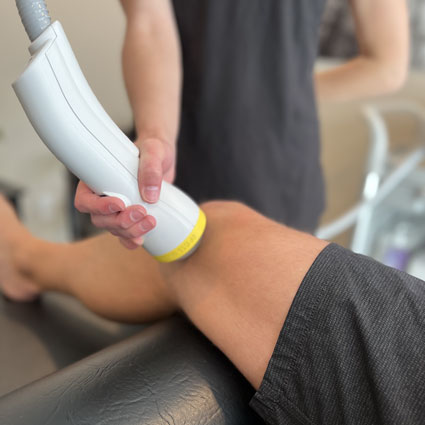
Let’s Nerd Out on SoftWave: How Does SoftWave Therapy Work?A Cellular-Level Breakdown of the Mechanisms & Research
September 17, 2026
So…. how does SoftWave therapy work??
SoftWave has become one of the most valuable tools in our office — not because it’s the newest piece of technology, but because it fits exactly how we think about healing. We’ve never been a practice that’s satisfied chasing symptoms around. From the first visit, our job is to find out what’s actually driving dysfunction in your body — structurally, neurologically, metabolically — and then support your body’s own capacity to correct it. That’s true whether we’re working through corrective chiropractic care, nutrition, targeted supplementation, or a tool like SoftWave. You’re not broken. You’re built to heal. SoftWave doesn’t mask pain — it stimulates the biological processes your body already knows how to run, at the tissue level, so the healing is real and not just quieted down.
That’s the thread that runs through everything we do here: dysfunction almost never lives at just one level. A structural imbalance affects how your nervous system functions. Chronic inflammation affects how well tissue can repair itself. An old injury that never fully resolved changes how you move and compensate somewhere else entirely. So the question we’re always asking isn’t “where does it hurt” — it’s “what’s the actual cause, and what levels is this affecting.” SoftWave gives us one more way to address that at a physiological level, working with your body’s own repair pathways instead of just managing what you feel in the moment.
What Is SoftWave Actually Doing Inside Your Body? A Cellular-Level Breakdown of the Research
You’ve probably tried something before you got here. Ibuprofen. Ice. Maybe a steroid shot. Maybe a few weeks of “just rest it and see.”
And somewhere in that process, you started wondering what SoftWave actually does — not the marketing version, the real one. What’s happening in your tissue between the moment the device touches your skin and the moment you feel better?
Honestly, most people never get a real answer to that question. They get “it helps with pain and inflammation” and that’s the end of it. I don’t think that’s good enough, and if you’re the kind of person who wants to understand what you’re investing in — not just take my word for it — this article is for you.
We’re going deep here. Real mechanisms, real citations, real numbers, including the uncomfortable ones. Let’s get into it.
THE SHORT VERSION (for you bullet-point people)
→ SoftWave doesn’t put anything into your body. It delivers a mechanical acoustic pulse, and your cells convert that physical stimulus into biochemical signaling — a process called mechanotransduction. That’s the whole concept in one word.
→ That signaling touches pain processing, inflammatory regulation, blood vessel formation (angiogenesis), and cellular proliferation — not just “less pain.”
→ In head-to-head trials, shockwave therapy loses to corticosteroid injections at 1 month for conditions like tennis elbow — and then wins at 3 and 6 months, while the steroid group often regresses. Fast relief and the best long-term outcome are not always the same treatment.
→ Steroids and NSAIDs — managing symptoms rather than stimulating the underlying repair process — and repeated use of both comes with documented, unglamorous downsides worth knowing about.
→ Tissue healing has a real biological timeline that doesn’t care how you feel. Feeling 80% better in two weeks doesn’t mean your tendon has finished remodeling.
→ That’s also why one session was never the plan. The biology unfolds in stages, and a full course (typically 4–10 sessions here) is what lets each stage build on the last.
If that’s all you needed, you’re good. If you want the receipts, keep going.
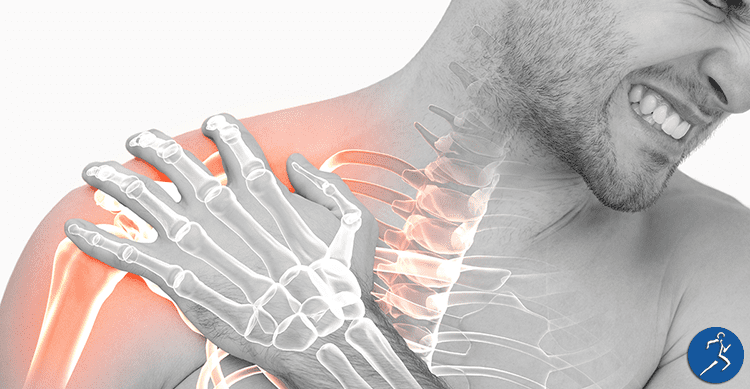
TABLE OF CONTENTS
- The Concept: Mechanotransduction
- What’s Actually Happening at the Cellular Level
- The Human Outcomes That Are Hard to Argue With
- Condition-by-Condition: What the Comparative Data Shows
- How SoftWave Stacks Up Against What You’ve Already Tried
- Why Healing Isn’t a Light Switch
- Why One Session Was Never the Plan
- The Real Cost Equation
- The Bottom Line
- FAQ
- What To Do Next
1. The Concept: Mechanotransduction
Here’s the paradigm shift I want you to walk away with.
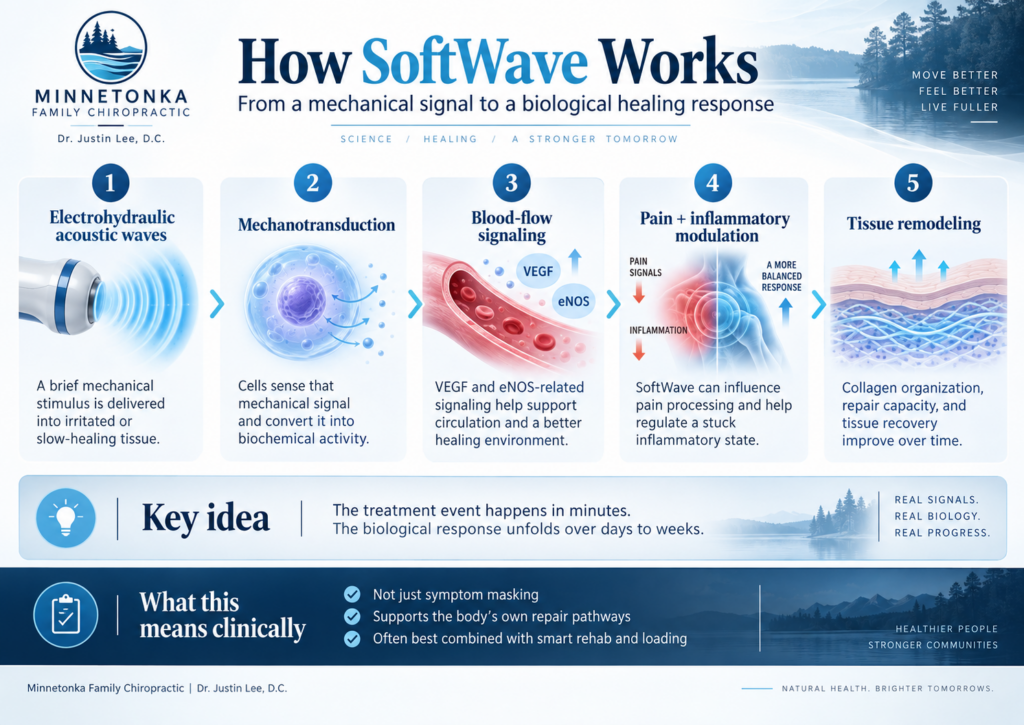
A patient hears “shockwave” and pictures something being vibrated, pounded, or buzzed. That’s not what’s happening. What’s actually occurring is a millisecond acoustic event that your cells detect and convert into a biological signal — one that keeps running for days to weeks after you’ve left the office.
The sequence looks like this:
mechanical stimulus → membrane mechanosensors → intracellular signaling cascade → growth factors, nitric oxide, inflammatory regulation, cellular activity → tissue remodeling
SoftWave is electrohydraulic — the device generates a spark-gap discharge underwater, producing an electrohydraulic acoustic wave that propagates through tissue (FDA device documentation describes this generation method directly). That’s a meaningfully different mechanism than a piezoelectric or pneumatic system, and it’s worth knowing, but the biology downstream of any shockwave generation method is what the research below is actually describing.
One honest note before we go further: the bulk of the clinical and mechanistic literature below is on extracorporeal shockwave therapy (ESWT) as a category — not the SoftWave-branded device specifically tested study-by-study. SoftWave/OrthoGold is a specific electrohydraulic system within that category, with its own FDA regulatory history (including a specific clearance for certain chronic diabetic foot ulcers). I’m not going to pretend every ESWT study is a SoftWave study. What I can tell you is that this is what acoustic-wave biology is capable of doing — the question of exactly how your specific session maps onto it is a conversation, not a marketing claim.
VEGF deserves its own paragraph, because it’s one of the more interesting threads in this whole story. VEGF — vascular endothelial growth factor — is essentially your body’s own signal that says “we need more vascular support here.” Chronically overloaded tendons, fascia, and previously injured tissue often sit in a compromised vascular environment; the local biology just isn’t set up to repair itself efficiently anymore. Shockwave research has repeatedly implicated VEGF and eNOS (endothelial nitric oxide synthase) signaling in what happens next. That’s a different claim than “it increases circulation for ten minutes” — it’s closer to “it activates the molecular machinery involved in building a better healing environment.”
2. What’s Actually Happening at the Cellular Level
This is the part almost nobody explains to patients, and it’s genuinely interesting if you like knowing why things work.
Mechanotransduction, mechanistically. Endothelial-cell studies show shockwaves activating membrane mechanosensors — β1-integrin and caveolin-1 specifically — which triggers ERK/Akt signaling and increases VEGF and eNOS. When researchers knock down those mechanosensors experimentally, the response drops substantially. That’s about as close as cell biology gets to “here’s the on-switch.”
Angiogenic signaling. VEGF and eNOS are the central regulators of new blood vessel growth and nitric-oxide-mediated vascular function. Animal wound models show increased VEGF, eNOS, and measurable new vessel formation after shockwave exposure. I want to be precise here: that’s strong mechanistic evidence for signaling toward angiogenesis — it’s a different (and more careful) claim than “guarantees new vessels in every human tendon.”
Inflammatory regulation — not elimination. Human macrophage studies found reduced pro-inflammatory (M1-associated) markers, increased IL-10, and reduced IL-1β after low-energy shockwave exposure. This matters because inflammation isn’t your enemy — it’s the first phase of healing. The problem is when it gets stuck in a chronic loop instead of progressing through its phases. What this research describes is rebalancing dysfunctional inflammatory signaling, not shutting inflammation off.
Cell proliferation. Shockwave stimulation triggers extracellular ATP release, which activates ERK1/2 and p38 signaling, which drives proliferation — shown across multiple cell types and in animal wound models. It’s a genuinely elegant mechanism: a mechanical pulse causing a burst of ATP release that then kicks off a proliferative cascade.
Progenitor-cell behavior. A 2024 review describes effects on stem/progenitor-cell proliferation, differentiation, migration, and recruitment, and human tendon-derived progenitor cells showed accelerated differentiation after ESWT exposure in vitro. This is promising, mechanistic, preclinical-to-early-human research — and it’s exactly the kind of claim that’s easy to oversell. The accurate version is that SoftWave activates endogenous progenitor-cell repair pathways. Not that it “floods the injury with stem cells.”
Bone-building signaling. Human bone-marrow stromal cells exposed to shockwaves show rapid membrane changes and Ras activation, followed by proliferation and osteogenic differentiation. This is part of why shockwave research extends into delayed and nonunion fracture healing — which we’ll get to.
Exosome signaling — the “future science” thread. Shockwaves trigger release of extracellular vesicles (exosomes) from endothelial cells, carrying pro-angiogenic microRNA (miR-19a-3p) that stimulates Akt/ERK pathways; in an animal cardiac model, these vesicles enhanced vascularization and repair. Fascinating research, worth knowing about — but that’s cardiac-model, mechanistic evidence. It’s a sidebar, not a claim that your musculoskeletal SoftWave session is “improving your exosome circulation.”
Pain modulation. Animal studies show temporary degeneration of small CGRP-containing sensory nerve fibers after shockwave treatment, with reinnervation beginning around two weeks later. That’s one plausible mechanism for analgesia that isn’t just distraction or placebo — the nervous system’s actual signaling architecture is being altered. This is animal data, and I’m labeling it as preclinical on purpose. It’s a real mechanism worth knowing about, not an established fact about human nerve remodeling yet.
3. The Human Outcomes That Are Hard to Argue With
Pain scores are useful, but they’re subjective — a skeptic can always say “that’s just placebo” or “that’s just regression to the mean.” Two areas of this research are much harder to wave away, because the endpoints are objective: did the wound actually close, and did the bone actually heal.
Diabetic wounds
A 2024 meta-analysis pooling 10 randomized controlled trials of diabetic foot ulcers found ESWT associated with:
→ 57% higher relative likelihood of complete ulcer healing (RR 1.57, 95% CI 1.26–1.95) → 75% lower relative likelihood of the ulcer remaining unchanged (RR 0.25, 95% CI 0.14–0.42) → Improved transcutaneous oxygen measurements
(Diabetes Research and Clinical Practice, 2024)
Researchers measured whether tissue actually closed. FDA documentation for the OrthoGold 100 platform specifically lists an indication for chronic, full-thickness diabetic foot ulcers under 16 cm² that have been present for more than 30 days, used alongside standard diabetic ulcer care — with clinical experience across 224 diabetic foot ulcers showing improvements in complete healing and wound area.
Bone healing
A meta-analysis of 1,200 long-bone nonunions found 73% healed overall after ESWT, with healing rates varying meaningfully by location — about 90% for metatarsals, 75.5% for tibias, 67% for femurs, and 64% for humeri — and union rates continuing to climb even beyond six months post-treatment. A separate review found one randomized trial reporting comparable union rates between ESWT (71%) and surgery (74%) for nonunion fractures.
Here’s an important caveat I want to be upfront about: the protocols used for nonunion fracture research often run at higher energy levels than routine musculoskeletal SoftWave sessions. I’m not telling you your elbow treatment is the same protocol as a nonunion fracture study. What this does prove is the underlying principle — an acoustic mechanical stimulus can change tissue biology enough that researchers are studying actual bone union, not just pain relief. That’s the ceiling of what this technology is biologically capable of.
4. Condition-by-Condition: What the Comparative Data Shows
Plantar fasciitis
This is one of the best-studied conditions in this space. A 2024 meta-analysis (Cortés-Pérez et al., Clinical Rehabilitation) pooled 16 studies and 1,121 patients comparing ESWT against corticosteroid injection:
→ At 3 months: ESWT outperformed steroid injection on pain (SMD −0.60), plantar fascia thickness (SMD −0.40), and foot function (SMD +0.27) → At 6 months: the gap widened further in ESWT’s favor — pain SMD −0.81, function SMD +0.67 → Most common adverse effects: transient local pain and mild redness
Compare that to the natural history: plantar fasciitis commonly takes 6 to 18 months to resolve on its own, with a meaningful share of patients — reported as 18–46% in some reviews — still symptomatic long-term.
A quick, honest note on PRP. A 2024 meta-analysis of 6 RCTs (432 patients) found platelet-rich plasma produced a statistically greater pain reduction than ESWT for plantar fasciitis — but the 0.67-point difference didn’t reach clinical significance. I’m including this because it’s the responsible way to talk about this, not because it makes SoftWave look worse. PRP injects a biologic product directly. SoftWave stimulates your own endogenous biology noninvasively. Different tools, and the comparative picture genuinely varies by outcome measured.
Tennis elbow (lateral epicondylitis) — the single best teaching example in this whole article
A 2024 meta-analysis (Zhang et al., Orthopaedic Surgery) of 6 RCTs comparing ESWT directly against corticosteroid injection for chronic lateral epicondylitis found something genuinely important:
→ At 1 month: corticosteroid wins — better pain scores, better grip strength, better function → At 3 months: ESWT pulls ahead — pain improved by roughly 1.15 points more, PRTEE functional score improved by roughly 9.5 points more, better grip strength → At 6 months: ESWT still ahead — pain improved by roughly 1.81 points more, better grip strength → Similarly low, mild-only adverse event rates in both groups
Now pair that with a landmark JAMA trial (Coombes et al., 2013) that should genuinely change how you think about corticosteroid injections. At one year post-injection:
→ Complete recovery or much improvement: 83% (steroid) vs. 96% (placebo injection) → Recurrence: 54% (steroid) vs. 12% (placebo)
Read that again. The group that got a placebo injection did better at one year than the group that got the actual steroid. That’s not a knock on the researchers or a conspiracy — it’s a real, published, peer-reviewed finding that tells you something important:
The treatment that makes you feel best fastest is not always the treatment that produces the best long-term result.
That idea is bigger than SoftWave. It’s the whole reason I want you to understand mechanism instead of just chasing the fastest relief.
Achilles tendinopathy — proof that SoftWave and rehab are teammates, not competitors
Two separate randomized trials (Rompe et al., Journal of Bone and Joint Surgery 2008; American Journal of Sports Medicine 2009) compared eccentric loading exercise alone against eccentric loading plus shockwave therapy:
Insertional Achilles tendinopathy, at 4 months:
| Outcome | Eccentric loading alone | + Shockwave |
|---|---|---|
| VISA-A score | 53 → 63 | 53 → 80 |
| Pain (0–10) | 7 → 5 | 7 → 3 |
| Completely recovered/much improved | 28% | 64% |
That advantage held at one year.
Midportion Achilles tendinopathy, at 4 months:
| Outcome | Eccentric loading alone | + Shockwave |
|---|---|---|
| VISA-A score | 50 → 73 | 51 → 87 |
| Completely recovered/much improved | 56% | 82% |
The takeaway isn’t “SoftWave replaces rehab.” It’s that the best question isn’t “will this fix me” — it’s “can we improve the tissue environment, then progressively load that tissue so it re-learns how to function.” That’s clinically more sophisticated than selling SoftWave as a standalone cure, and it’s also just the truth of what the data shows.
Knee osteoarthritis — strong on pain and function, not on cartilage regrowth
This is where I want to be careful, because it’s also where the steroid comparison gets genuinely striking.
McAlindon et al., JAMA, 2017 — a 2-year randomized trial of intra-articular triamcinolone (a corticosteroid) every 3 months versus saline:
→ Cartilage thickness loss: −0.21mm (triamcinolone) vs. −0.10mm (saline) — roughly double the cartilage loss in the steroid group → No significant pain difference between the two groups → The authors’ own conclusion: these findings “do not support this treatment” for symptomatic knee osteoarthritis
Read that one twice, too. Same pain relief, meaningfully more cartilage loss. That’s about as clean a “symptom control isn’t the same as tissue health” data point as exists in the orthopedic literature.
On the SoftWave side: umbrella-review-level data on ESWT for knee OA describes improved pain scores, range of motion, and functional scores (WOMAC, Lequesne) compared to sham treatment. I’m not going to tell you SoftWave regrows cartilage — the human evidence is considerably stronger for pain and function than for demonstrated cartilage regeneration, even though there’s promising preclinical/progenitor-cell research pointing in that direction. That distinction matters, and I’d rather you trust me on the things I’m confident about than oversell the ones I’m not.
Rotator cuff tendinopathy
A 2024 systematic review and meta-analysis (Xue et al., BMC Musculoskeletal Disorders) of 16 RCTs and 1,093 patients found ESWT produced significant improvement over control across pain (VAS), multiple functional scores (Constant-Murley, UCLA, ASES), and external rotation range of motion.
Worth saying clearly: “shoulder pain” isn’t one diagnosis. It could be rotator cuff tendinopathy, calcific tendinopathy, adhesive capsulitis, instability, arthritis, cervical referral, or labral pathology — and SoftWave isn’t the same answer to all of them. That’s not a weakness in the case for SoftWave. It’s the actual point of getting a real assessment first instead of treating symptoms blind.
Chronic low back pain
A 2023 meta-analysis (Liu et al., Journal of Orthopaedic Surgery and Research) of 12 RCTs and 632 patients found ESWT produced significantly greater pain reduction than control at both 4 weeks (−1.04) and 12 weeks (−0.85), with disability scores improving similarly at both time points and no serious treatment-related adverse events reported.
Low back pain has a dozen possible underlying causes, so I’m not going to say “SoftWave heals back pain” as a blanket statement. What the research supports is that ESWT is a legitimate, evidence-backed option for selected chronic musculoskeletal low-back presentations — which is exactly the kind of claim I’m comfortable standing behind.
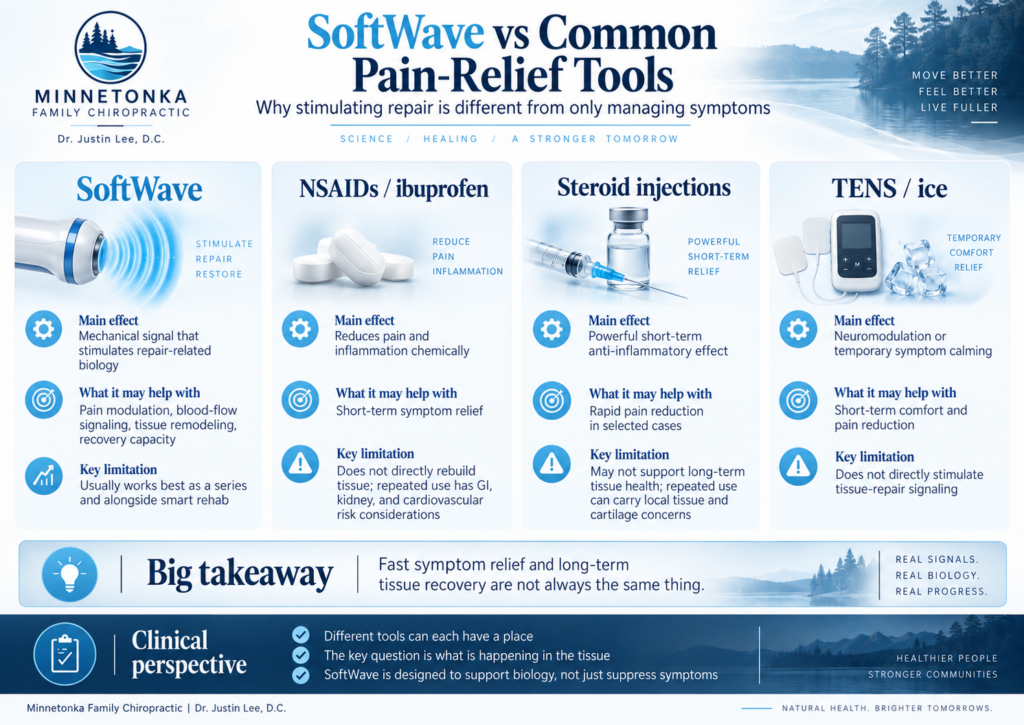
5. How SoftWave Stacks Up Against What You’ve Already Tried
NSAIDs (ibuprofen and friends). Yes — they reduce pain and inflammation. What they don’t do is repair a degenerative tendon. Nor ‘heal’ your body. Just because the pain diminishes for a minute… doesn’t mean the problem has healed.
A large 2024 meta-analysis (523,240 patients) found no statistically significant association between NSAID use and delayed union/nonunion overall (adjusted OR 1.11, 95% CI 0.99–1.23) — so I’m not going to tell you occasional ibuprofen use is destroying your healing capacity, because the honest data doesn’t support that. But here’s the nuance that actually matters for SoftWave patients specifically: a 2025 international expert consensus on shockwave therapy (published in the British Journal of Sports Medicine) reached 78.6% agreement that NSAIDs should specifically be avoided throughout an active shockwave treatment course, because the treatment’s mechanism runs directly through the same inflammatory signaling pathway that NSAIDs suppress. Acetaminophen was considered an acceptable alternative for pain management during that window. That same panel, notably, did not reach consensus on avoiding ice — which tells you the old blanket “never ice it” advice deserves more nuance than it usually gets.
Steroid injections. May useful in the right circumstance. An emergency. But repeated suppression of inflammation isn’t biologically neutral — the JAMA data above (tennis elbow recurrence, knee cartilage loss) makes that point better than I could in prose. Documented potential complications of musculoskeletal corticosteroid injections include tendon rupture, skin atrophy, accelerated osteoarthritis progression, and — with repeated systemic exposure — effects like hyperglycemia and adrenal suppression. Steroids can be the right call sometimes, again, when absolutely needed. Repeated use as a recurring management strategy is a different conversation.
TENS units. A large meta-analysis (381 RCTs, 24,532 participants) found moderate-certainty evidence that TENS reduces pain during or immediately after stimulation compared to placebo. That’s legitimate — but look at what’s actually being studied: pain, during or immediately after the device is on. Compare that to the endpoints in shockwave research: VEGF/eNOS signaling, microcirculation, wound closure, tendon function, bone union, cell proliferation. TENS is neuromodulation and analgesia. ESWT is pain modulation plus mechanobiological tissue signaling. Different targets, not a “better vs. worse” story.
Therapeutic ultrasound. Research comparing the two for lateral epicondylitis found ESWT producing greater pain reduction at 1 and 3 months, though study heterogeneity was high. The mechanistic distinction: continuous therapeutic ultrasound delivers acoustic energy mostly for thermal and nonthermal effects, while shockwaves are discrete, high-pressure mechanical pulses built to initiate mechanotransductive cellular signaling. I won’t oversimplify this to “ultrasound just heats, SoftWave regenerates” — ultrasound biology is more nuanced than that — but the underlying energy characteristics and research targets are genuinely different.
6. Why Healing Isn’t a Light Switch
This might be the most important section in the entire article, and it barely needs a SoftWave citation to make the point — it’s just honest biology.
| Tissue | Reality |
|---|---|
| Muscle strain | Return-to-sport time ranges roughly 15–86 days depending on severity; structural changes can persist after you feel recovered |
| Tendon | Healing moves through inflammatory → proliferative → remodeling phases; a healed tendon may never fully regain uninjured mechanical properties — this is not a 48-hour process |
| Ligament sprain | Actual healing commonly needs 6 weeks to 3 months; measurable laxity can persist 6–12 months |
| Plantar fascia | Natural resolution commonly takes 6–18 months or longer |
| Bone / nonunion | Remodeling is measured in months — union rates in the ESWT literature were still climbing past the six-month mark |
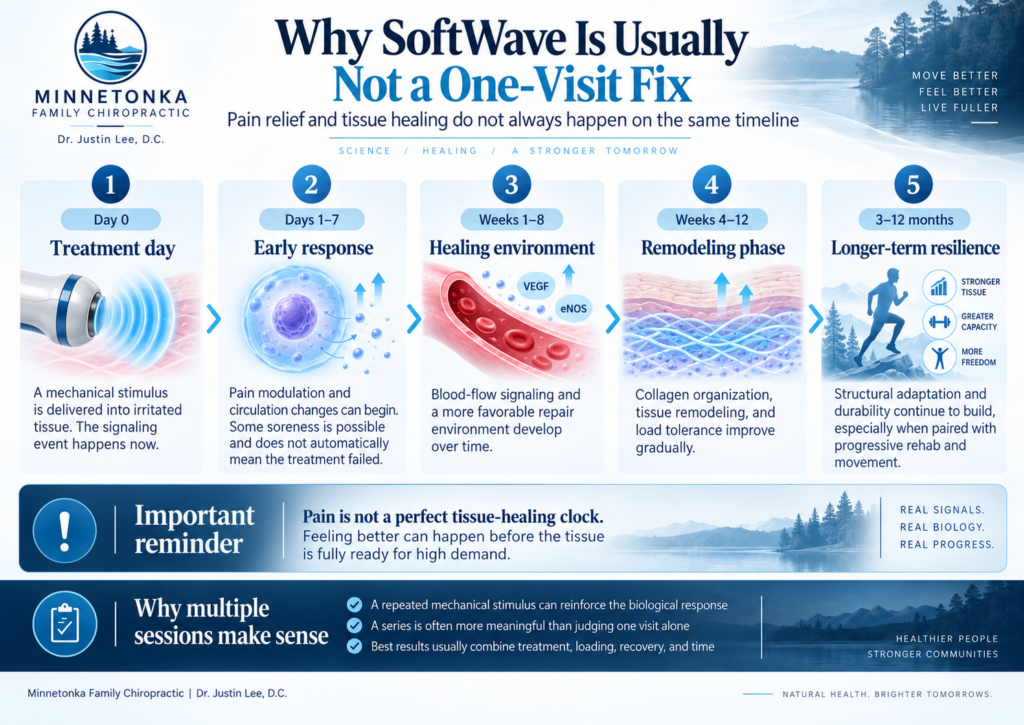
Pain is not a tissue-healing clock. You can feel dramatically better in two weeks while your collagen organization, vascular adaptation, and load tolerance are still months away from maturity. That’s not a flaw in SoftWave, or in your body — it’s just how tissue works. It’s also part of why more than half of recurrent hamstring injuries reportedly happen within the first month after return to play: the athlete’s symptoms recovered faster than the tissue did.
Here’s the version I actually tell patients: feeling better is great — it means we’re moving the right direction. It doesn’t mean the tissue is ready for everything yet.
7. Why One Session Was Never the Plan
If the biology above is real, then the logical follow-up question is: why does a course of SoftWave run multiple sessions instead of one big one?
The same 2025 international Delphi consensus referenced above recommends, for many indications, treatment intervals around 1–2 weeks apart, commonly 3–5 sessions, with specifics varying by condition. And critically, the expert panel did not recommend shutting patients down afterward — there was strong consensus against blanket range-of-motion restrictions or general weight-bearing precautions post-treatment for tendon and fascia conditions.
That supports a specific philosophy, and it’s the one we actually practice:
stimulus → appropriate recovery → progressive loading → repeat stimulus → adaptation
— not “treat, then sit on the couch and hope.” Early sessions are doing more of the pain-and-inflammation-signaling work. By the middle of a course, the angiogenic and proliferative signaling is doing more of the heavy lifting. The final sessions are consolidating that work into lasting tissue change. Stopping halfway through often means stopping right as the deeper regenerative signaling is ramping up — which is the opposite of when you’d want to quit.
8. The Real Cost Equation
I want to be careful here, because I’m not going to tell you SoftWave has been proven in dedicated economic trials to save every patient money — that kind of diagnosis-specific cost-effectiveness research mostly doesn’t exist yet, and claiming otherwise wouldn’t be honest.
What does exist is a clear picture of what unresolved chronic pain costs. A 2025 CDC-authored analysis (Guy et al., Medical Care) found that in 2021, chronic pain cost the United States $722.8 billion — $530.6 billion in excess healthcare spending and $192.2 billion in lost productivity. Individuals with chronic pain averaged $8,068 more in annual medical spending and $2,923 more in lost productivity than people without it.
So the question isn’t really “why would I spend more on SoftWave than a bottle of ibuprofen costs.” It’s:
“What is the lifetime cost of leaving this unresolved?”
Appointments. Imaging. Medications. Injections. Braces. Missed training time. Missed work. Compensating movement patterns that create a second problem somewhere else. Potentially, eventually, surgery. You don’t have to put a precise dollar figure on every one of those for the underlying point to land — a single session’s price tag was never the right comparison in the first place.
9. The Bottom Line
If you remember nothing else from all of this:
→ SoftWave is a stimulus, not a substance — nothing injected, just a mechanical signal your own cells convert into biochemical repair activity → That signaling reaches further than pain relief: blood flow, inflammation regulation, cell proliferation, and — in the strongest human evidence — actual wound closure and bone union → Fast relief and the best long-term outcome are frequently two different treatments, and the tennis elbow and knee OA steroid data make that case better than any marketing claim could → Tissue biology runs on its own timeline regardless of how you feel — which is exactly why the full course of sessions, and what you do between them, both matter → This works best as part of a plan, alongside movement and rehab, not as a single stand-alone fix
You’re not broken. Your body already knows how to heal. SoftWave gives it a specific, well-studied signal to work with — and the rest of your daily habits (movement, sleep, nutrition, staying off the things that blunt the process) decide how well that signal gets used.
FAQ
Is SoftWave the same as a TENS unit or therapeutic ultrasound? No. TENS is neuromodulation — it changes how pain signals are processed, mostly during and right after use. Therapeutic ultrasound mostly delivers continuous acoustic energy for thermal effects. SoftWave uses discrete, high-pressure electrohydraulic acoustic pulses that trigger mechanotransduction — a genuinely different mechanism aimed at the underlying tissue biology, not just the pain signal.
Does SoftWave actually use stem cells? No — and be skeptical of anyone who tells you it does. What the research supports is that SoftWave can activate and influence your body’s own endogenous progenitor-cell repair pathways. That’s a real and interesting mechanism. It’s not the same as introducing outside stem cells.
Why did my friend feel amazing after one session and I didn’t? Because pain relief and tissue healing run on different timelines, and they don’t always move together. Some people get an early hit of relief from the pain-modulation effect; the deeper angiogenic and remodeling work is often still happening even when you can’t feel it directly. Neither response means the treatment isn’t working.
Can I just take ibuprofen alongside my sessions? I’d avoid it specifically during an active treatment course. The mechanism SoftWave relies on runs through the same inflammatory signaling that NSAIDs are designed to suppress — and that’s not just my opinion, it’s where a 2025 international expert consensus on shockwave therapy landed too. Acetaminophen is a reasonable alternative if you need something for pain in the meantime.
Is icing after a session actually bad? The evidence here is softer than you’d think — the same expert panel that reached strong agreement on avoiding NSAIDs did not reach consensus on avoiding ice. So I’d rather you not treat “no ice, ever” as gospel. If you have specific questions about your own protocol, that’s exactly the kind of thing to bring to your next visit.
How many sessions will I actually need? It varies by condition, but a full course is typically 4 to 10 sessions, usually starting with one session to see how your tissue responds. The research on treatment spacing generally supports sessions roughly 1–2 weeks apart. Stopping partway through a course is usually stopping right as the deeper regenerative signaling is ramping up.
What To Do Next
If you’re dealing with something that fits the pattern above — plantar fasciitis, tennis elbow, Achilles pain, knee pain, shoulder pain, or chronic low back pain that hasn’t responded to the usual first attempts — the most useful next step isn’t reading more, it’s getting an actual assessment so we know exactly what we’re treating and why.
If that’s you and you’re local to the west metro Twin Cities, go ahead and grab a time on the calendar and we’ll walk through what’s actually going on with your tissue before we talk about any treatment plan.
(For anyone who read this far because they genuinely like the science — I mean that. This stuff is fascinating, and understanding it is going to make you a better advocate for your own body whether or not you ever set foot in our office.)
If you’re already a patient and have questions about your specific protocol, bring them to your next visit — I’d rather you fully understand what’s happening than just show up and hope it works.
And if you still want help after everything above, here’s the link to get on the schedule — or call the office direct at 952-229-8750.
Minnetonka Family Chiropractic | 11349 Highway 7, Minnetonka, MN 55305 | 952-229-8750
— Dr. Justin Lee, D.C.
REFERENCES
- Cortés-Pérez I, Moreno-Montilla L, Ibáñez-Vera AJ, Díaz-Fernández Á, Obrero-Gaitán E, Lomas-Vega R. Efficacy of extracorporeal shockwave therapy, compared to corticosteroid injections, on pain, plantar fascia thickness and foot function in patients with plantar fasciitis: a systematic review and meta-analysis. Clin Rehabil. 2024;38(8):1023-1043.
- Zhang L, Zhang X, Pang L, Wang Z, Jiang J. Extracorporeal Shock Wave Therapy Versus Local Corticosteroid Injection for Chronic Lateral Epicondylitis: A Systematic Review with Meta-Analysis of Randomized Controlled Trials. Orthop Surg. 2024;16(11):2598-2607.
- Coombes BK, Bisset L, Brooks P, Vicenzino B. Effect of corticosteroid injection, physiotherapy, or both on clinical outcomes in patients with unilateral lateral epicondylalgia: a randomized controlled trial. JAMA. 2013;309(5):461-469.
- McAlindon TE, LaValley MP, Harvey WF, et al. Effect of Intra-articular Triamcinolone vs Saline on Knee Cartilage Volume and Pain in Patients With Knee Osteoarthritis: A Randomized Clinical Trial. JAMA. 2017;317(19):1967-1975.
- Chuang P-Y, Yang T-Y, Tsai Y-H, Huang K-C. Do NSAIDs affect bone healing rate, delay union, or cause non-union: an updated systematic review and meta-analysis. Front Endocrinol. 2024;15:1428240.
- Rhim HC, et al. Recommendations for use of extracorporeal shockwave therapy in sports medicine: an international modified Delphi study. Br J Sports Med. 2025.
- Rompe JD, Furia J, Maffulli N. Eccentric loading compared with shock wave treatment for chronic insertional Achilles tendinopathy: a randomized, controlled trial. J Bone Joint Surg Am. 2008;90(1):52-61.
- Rompe JD, Furia J, Maffulli N. Eccentric loading versus eccentric loading plus shock-wave treatment for midportion Achilles tendinopathy: a randomized controlled trial. Am J Sports Med. 2009;37(3):463-470.
- Xue X, Song Q, Yang X, Kuati A, Fu H, Liu Y, Cui G. Effect of extracorporeal shockwave therapy for rotator cuff tendinopathy: a systematic review and meta-analysis. BMC Musculoskelet Disord. 2024;25:357.
- Liu K, Zhang Q, Chen L, Zhang H, Xu X, Yuan Z, Dong J. Efficacy and safety of extracorporeal shockwave therapy in chronic low back pain: a systematic review and meta-analysis of 632 patients. J Orthop Surg Res. 2023;18:455.
- Johnson MI, Paley CA, Jones G, Mulvey MR, Wittkopf PG. Efficacy and safety of transcutaneous electrical nerve stimulation (TENS) for acute and chronic pain in adults: a systematic review and meta-analysis of 381 studies (the meta-TENS study). BMJ Open. 2022;12(2):e051073.
- Guy GP Jr, Miller GF, Legha JK, Rikard SM, Strahan AE, Mikosz C, Florence CS. Economic Costs of Chronic Pain—United States, 2021. Med Care. 2025;63(9):679-685.
- Extracorporeal shock wave therapy favors healing of diabetic foot ulcers: a systematic review and meta-analysis. Diabetes Res Clin Pract. 2024.
- Extracorporeal Shockwave Therapy in the Treatment of Nonunion in Long Bones: A Systematic Review and Meta-Analysis. 2022.
- Willems A, van der Jagt OP, Meuffels DE. Extracorporeal Shock Wave Treatment for Delayed Union and Nonunion Fractures: A Systematic Review. J Orthop Trauma. 2019;33(2):97-103.
Editor’s note for Dr. Lee: the cellular-mechanism citations in Section 2 (integrin/caveolin mechanosensors, macrophage IL-10/IL-1β shifts, ATP/ERK proliferation, exosome/miR-19a-3p signaling, CGRP fiber degeneration) reflect the mechanistic literature as compiled and are presented with appropriately hedged language, but I haven’t independently pulled the primary papers for each one this pass — worth a quick verification round on those specific citations before this goes live, consistent with our standing fact-check policy. Everything in Sections 3–8 (the numbered clinical trials and meta-analyses) was independently verified against the primary source.
Dr. Justin Lee, D.C.
Doctor of Chiropractic & Holistic Health
Dr. Justin Lee is a passionate chiropractor who believes in the innate healing potential within you. This passion stems from a personal experience in collegiate hockey, competitive CrossFit, and a relentless pursuit to holistically optimize performance and recovery. His professional mission is to help as many individuals and families as possible uncover the path to true health. He is dedicated to guiding them on how to integrate lifestyle changes for a sustainable and healthier future. All of which shapes his unique approach to personalized chiropractic care.
You are one ‘aJUSTINment’ away from a healthier life.

get to know me

