Dr.'s Blog

Your Back Pain Isn’t About Damage — It’s About Your Nervous System (Why UNDERSTANDING Pain is Crucial!)
May 19, 2026
Why Understanding Your Pain Matters More Than You Think (And What Most Doctors Won’t Tell You)
You’ve been living with lower back pain for months. Maybe years.
You’ve tried the usual stuff. Physical therapy. Muscle relaxers. Cortisone shots. Rest. Ice. Heat. That foam roller gathering dust in your closet.
Some of it helps. For a while. But the pain keeps coming back. And at this point, you’re starting to wonder if this is just… how your body is now.
Here’s what most people with chronic back pain don’t know: The longer pain sticks around, the less it has to do with tissue damage — and the more it has to do with how your nervous system is processing signals. And that changes everything about how we approach getting you better.

The Problem With How Most People Think About Pain
Most people assume pain works like this: Something is damaged → Your body sends a pain signal → You feel pain.
Simple. Linear. Mechanical.
And when pain is acute — like you just sprained your ankle or pulled a muscle — that model works pretty well.
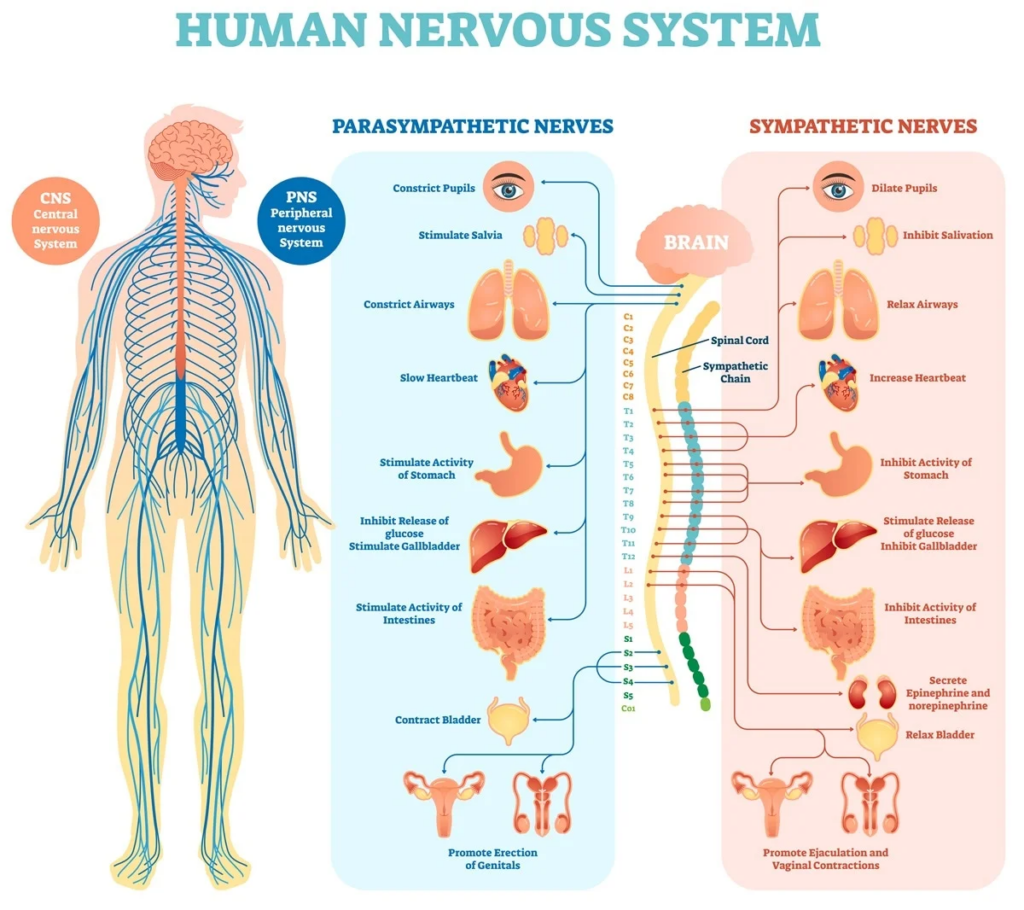
But chronic pain? That’s a completely different animal. Because once pain has been around for 12 weeks or longer, your nervous system starts adapting. It gets better at creating pain signals. It becomes more sensitive. It starts firing even when there’s no tissue damage happening.
It’s not that the pain isn’t real. It absolutely is. But the source has shifted from damaged tissue to a sensitized nervous system. And if you’re still treating chronic pain like it’s an acute injury — rest, ice, “don’t aggravate it” — you’re working from the wrong playbook.
What the Research Actually Shows
A massive new research review just came out analyzing 19 systematic reviews covering over 5,200 people with chronic low back pain.
The big finding? Pain Neuroscience Education — teaching people how pain actually works — significantly reduces pain intensity and improves function. Especially when combined with movement and chiropractic care.
Here’s what that means in plain English:
When people understand: → That pain doesn’t always equal damage
→ That their nervous system has become hypersensitive
→ That movement is safe and necessary for healing
→ That they’re not broken — their system just got stuck in a protective pattern
They get better. Faster. And the improvements last longer.
The research showed that people who received education about how pain works, combined with exercise or chiropractic care, had better outcomes than people who just got treatment alone. Why? Because knowledge changes behavior. And behavior changes outcomes.
Your Nervous System Got Stuck in Protection Mode
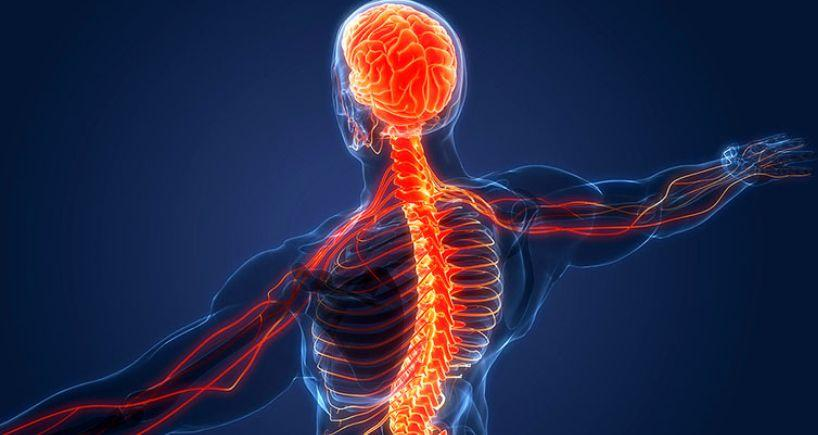
Think about it like this: When you first injured your back, your nervous system did exactly what it’s supposed to do. It created pain to protect you. It tightened muscles. It limited movement. It sent signals to your brain saying, “Hey, something’s wrong here. Be careful.” That’s adaptive. That’s helpful. That’s your body doing its job.
But here’s what happens when pain sticks around for months or years. Your nervous system doesn’t just go back to normal when the tissue heals. It stays on high alert. It keeps creating pain signals — not because there’s ongoing damage, but because it’s trying to protect you from a threat that’s no longer there.
It’s like a car alarm that won’t shut off. The alarm isn’t broken. It’s just stuck. And no amount of resting, icing, or avoiding movement is going to reset it.
What resets it? Movement. Education. Restoring proper nervous system function through chiropractic care. Teaching your brain that movement is safe again. That’s what we’re doing when we work together — we’re not just addressing the pain, we’re retraining your nervous system to stop being stuck in that protective loop.
And honestly, this is one of the most frustrating things I see in practice. People come in terrified to move because every time they do, they get a pain signal. So they stop moving. They rest more. They avoid activities they used to love. And the nervous system interprets that as confirmation that there really IS something dangerous happening, so it keeps firing. It’s a vicious cycle, and breaking it requires both hands-on care and understanding what’s actually going on.
Education Is Part of the Treatment
This is why we don’t just adjust you and send you on your way. When you come in and say, “I bent over to tie my shoe and my back locked up. Did I re-injure something?” — we talk through it.
Your back didn’t re-injure. What likely happened is your nervous system perceived a threat. Maybe you moved in a pattern you haven’t done in a while, or your muscles were tight, or you were stressed, and it responded by tightening up to protect you. That’s a nervous system response, not tissue damage. We’re going to adjust you to restore motion, but I also want you to understand that bending over didn’t break anything. Your body just got stuck in a protective pattern.
That’s education. That’s empowerment. That’s giving you the tools to interpret what’s happening in your body without panicking.
And the research backs this up:
People who receive this kind of education alongside their treatment have: → Less fear about movement
→ Better long-term pain outcomes
→ More confidence in their body’s ability to heal
→ Less reliance on pain meds and passive treatments
I see this play out constantly. Someone comes in who’s been told by their doctor to “take it easy” or “avoid bending and lifting” or “your disc is degenerated so you need to be careful for the rest of your life.” And they internalize that message. They start living like they’re fragile. Like one wrong move is going to throw them back to square one. That belief system becomes just as limiting as the pain itself.
But when we can shift that narrative — when you start to understand that your body is resilient, that pain doesn’t mean damage, that movement is actually what your nervous system needs to recalibrate — everything changes. You start moving again. You stop living in fear. You trust your body. And your nervous system gets the signal that it’s safe to calm down.
The ADIO Principle: Your Body Already Knows How to Heal
This is the FIRST thing that my patients understand.
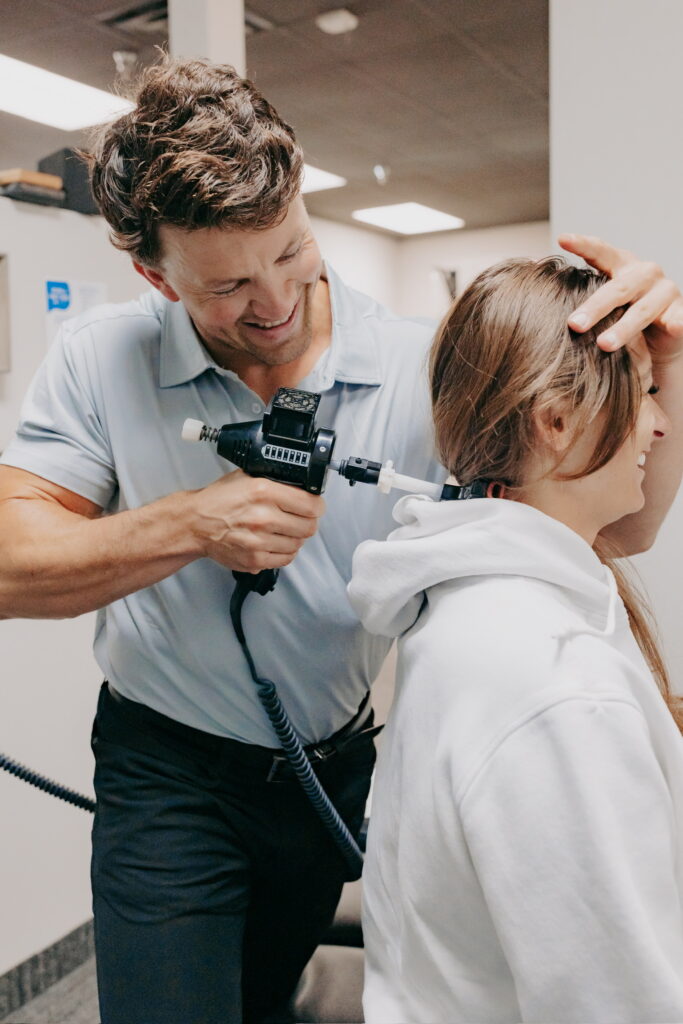
This is why we operate from an Above-Down, Inside-Out philosophy. Your body doesn’t need to be fixed. It needs interference removed.
When your spine is misaligned, when your nervous system is stuck in a hypervigilant state, when you’re operating from fear and avoidance — that’s interference. Our job isn’t to “heal” you. Your body does the healing. Our job is to remove the interference through adjustments, through movement, through education, so your innate intelligence can do what it’s designed to do.
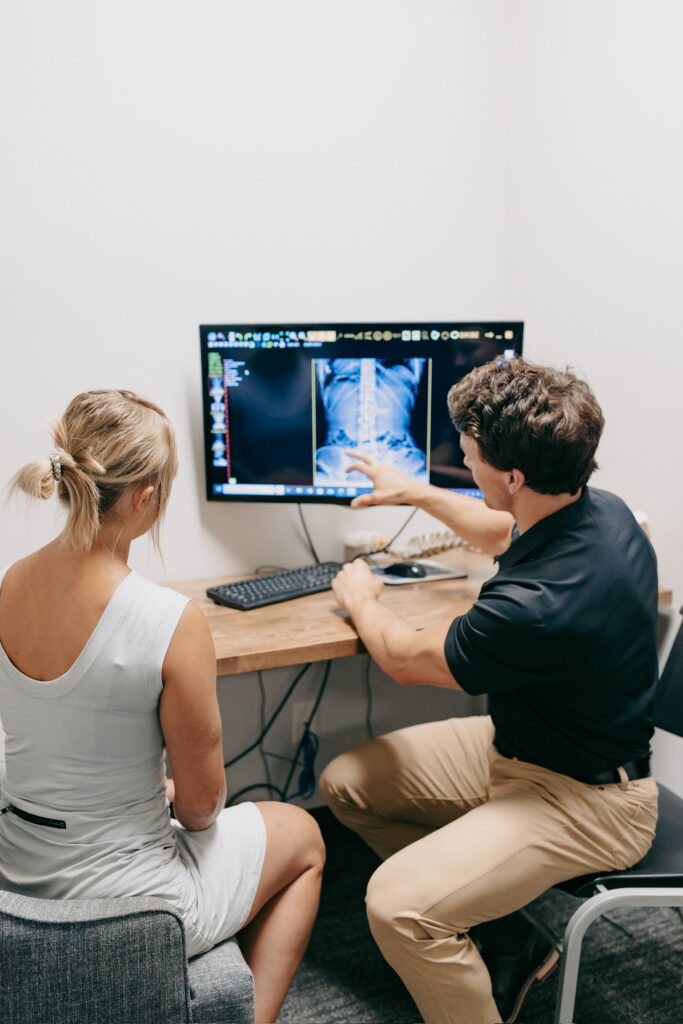
And look, I get it. This isn’t the story most people have been told about chronic pain. You’ve probably been to doctors who looked at your MRI and said, “Well, you’ve got some degeneration here, some disc bulging there. That’s why you’re in pain.” And that makes logical sense, right? Something looks wrong on the image, so that must be the problem.
But here’s what the research shows: A huge percentage of people with disc bulges, degeneration, and other “abnormal” findings on imaging have ZERO pain. And plenty of people with significant pain have completely normal imaging. So what’s the disconnect? The nervous system. How your brain is interpreting the signals it’s receiving. Whether your system is stuck in a state of threat or whether it feels safe.
That’s not to say structure doesn’t matter. It absolutely does. If your spine is misaligned and joints aren’t moving properly, that creates aberrant input to your nervous system. That’s why we adjust you. But it’s not just about “putting bones back in place.” It’s about restoring proper motion and nervous system function so your brain gets accurate information about what’s happening in your body.
The Corrective Care Model (Breaking the Cycle):
1. CHIROPRACTIC ADJUSTMENTS
→ Restore proper spinal motion and joint function
→ Improve mechanoreceptor input to the brain
→ Enhance proprioception (body’s sense of position and movement)
→ Reduce aberrant signaling that triggers protective responses
→ Increase prefrontal cortex function (executive decision-making, stress regulation)
→ Decrease muscle guarding and compensatory patterns
Result: Brain receives accurate information → Reduces perceived threat
2. PAIN NEUROSCIENCE EDUCATION
→ Teach that pain ≠ damage
→ Explain nervous system sensitization
→ Reframe pain as a protective response, not tissue breakdown
→ Reduce fear and catastrophizing
→ Activate brain’s reward system (dopamine release)
→ Trigger endogenous pain relief mechanisms (natural morphine production)
Result: Reduces cognitive threat → Nervous system feels safer
3. MOVEMENT & EXERCISE
→ Progressive loading that challenges protective patterns
→ Retrain brain that movement is safe
→ Build confidence through gradual exposure
→ Reinforce proper motor patterns
→ Strengthen supporting structures
→ Improve tissue quality and resilience
Result: Behavioral proof that movement is safe → Resets nervous system set point
What This Actually Looks Like in Practice
So what does this mean for you if you’ve been dealing with chronic back pain and you feel like you’ve tried everything?
Pain doesn’t mean damage. You’re not broken. Your nervous system is stuck in a protective pattern. That’s fixable. But it requires a shift in how you think about what’s happening. When you feel pain, instead of immediately thinking “I’ve re-injured something” or “I’m making it worse,” you can start asking, “What is my nervous system reacting to? Is this a tissue problem or a nervous system sensitivity problem?”
Movement is medicine. The worst thing you can do for chronic pain is avoid movement. Your body needs to relearn that movement is safe. That doesn’t mean you go out and deadlift 400 pounds tomorrow. It means you start moving in ways that challenge your nervous system’s protective patterns without overwhelming it. Progressive loading. Gradual exposure. Building confidence.
You need a combination approach. The research is clear:
→ Adjustments restore proper joint function and nervous system input
→ Movement retrains your brain that it’s safe
→ Education gives you the framework to make sense of what’s happening
People who combine all three get the best results. Not one or the other. All three working together.
The Outcome:
Proper Spinal Function
↓
Accurate Nervous System Input
↓
Brain Perceives Safety (Not Threat)
↓
Reduced Pain Signaling
↓
Increased Movement Confidence
↓
Positive Feedback Loop (more movement = more safety signals)
↓
Nervous System Recalibrates
↓
Pain Resolves + Function Improves + Resilience Builds
This takes time. Your nervous system didn’t get stuck overnight. It’s not going to reset overnight. But with the right approach, it will reset. And the improvements last. I’ve seen people who’ve been dealing with pain for years start to turn a corner once they understand what’s actually happening and they commit to the process.
There’s this idea in our culture that health should be quick. That if something doesn’t work in a week or two, it’s not working. But chronic pain is complex. It took time to develop. It’s going to take time to resolve. And that’s okay. Because the alternative is staying stuck where you are, cycling through the same treatments that give you temporary relief but never actually address the root cause.
The Integration (All Three Together Work Best):
BIOMECHANICAL (Adjustments)
+
NEUROLOGICAL (Improved brain-body communication)
+
COGNITIVE (Education reducing fear/threat)
+
BEHAVIORAL (Movement retraining protective patterns)
-> LASTING CHANGE
The “Aha” Moment
There’s something fascinating in the research that I want to mention. They found that when people receive relevant, useful, validating information about their body and their pain, it actually activates the brain’s reward system. That “aha” moment — when something finally makes sense — triggers the release of dopamine. And dopamine is a precursor for the body’s production of endogenous morphine.
Meaning your body literally produces its own pain-relieving substances when you receive information that helps you make sense of what’s happening.
Pretty wild when you think about it!! Just understanding your pain can trigger your body’s natural pain relief mechanisms. Not because the information is a magic cure, but because it reduces threat. It reduces fear. It gives your nervous system permission to stop being on high alert.
And honestly, that’s one of my favorite parts of this work. Watching someone’s face change when they finally understand what’s been happening in their body. When they realize they’re not broken. When they realize there’s a path forward. That shift is powerful. And it’s often the beginning of real change.
Where Do We Go From Here?
If you’ve been stuck in the chronic pain cycle and you’re ready for a different approach, we can help. We’ll help you understand what’s actually happening in your body. We’ll remove the interference through chiropractic adjustments that restore proper nervous system function. We’ll give you movement strategies that retrain your brain. And we’ll walk through this process with you so you’re not doing it alone.
Because the reality is, most people don’t need another passive treatment. They don’t need another pill or another shot or another “just rest and it’ll get better.” They need education. They need movement. They need someone who’s going to treat them like a whole person, not just a collection of symptoms.
And that’s what we do. We show up every day to help people break free from chronic pain patterns and reclaim their lives. Not by masking symptoms. Not by telling you to just live with it. But by addressing the root cause and empowering you with the knowledge and tools to take control of your health.
That’s the mission. That’s always been the mission.
Dr. Justin Lee, DC
Minnetonka Family Chiropractic
11349 Highway 7, Minnetonka/Hopkins, MN 55305
(612) 470-9210
drjustinlee.com
References
García Cancela J, Conde Vázquez O, Navarro Ledesma S, Pruimboom L. The effectiveness of pain neuroscience education in people with chronic nonspecific low back pain: An umbrella review with meta-analysis. Annals of Physical and Rehabilitation Medicine. 2025;68:102020.
Watson JA, Ryan CG, Cooper L, et al. Pain neuroscience education for adults with chronic musculoskeletal pain: a mixed-methods systematic review and meta-analysis. J Pain. 2019;20:1140.e1-1140.e22.
Haavik H, Murphy B. The role of spinal manipulation in addressing disordered sensorimotor integration and altered motor control. J Electromyogr Kinesiol. 2012.
Dr. Justin Lee, D.C.
Doctor of Chiropractic & Holistic Health
Dr. Justin Lee is a passionate chiropractor who believes in the innate healing potential within you. This passion stems from a personal experience in collegiate hockey, competitive CrossFit, and a relentless pursuit to holistically optimize performance and recovery. His professional mission is to help as many individuals and families as possible uncover the path to true health. He is dedicated to guiding them on how to integrate lifestyle changes for a sustainable and healthier future. All of which shapes his unique approach to personalized chiropractic care.
You are one ‘aJUSTINment’ away from a healthier life.

get to know me

