Dr.'s Blog
Your Hips Are the Center of Everything — Here’s Why They Fall Apart… And What You Can Do About It
May 20, 2026
And the functional, root-cause approach to getting them back
There’s a reason coaches, trainers, and therapists across the board keep coming back to the same phrase: the hips don’t lie. Not because it’s a catchy saying — but because it’s genuinely, anatomically true. When your hips move well, your whole body tends to move well. When they don’t… everything downstream and upstream of them starts compensating. Your knees. Your low back. Your SI joint. Even your shoulders.
And here’s what I see constantly in practice: people chasing the symptom — the aching knee, the nagging low back, the tight hamstring — without anyone ever stepping back and asking, “how’s this person’s hip actually functioning?” That’s where the real answer usually lives.
This article is for anyone who’s been told they have tight hips, who sits for long stretches every day, who deals with low back or knee discomfort, or who just wants to understand how to move better and age well. We’re going to keep this practical and grounded in what the research actually shows — while going a little deeper than your average “do these 5 stretches” list.
Let’s get into it.
Why the Hip Joint Is Such a Big Deal
The hip is what’s called a ball-and-socket joint. The rounded head of the femur (your thigh bone) sits inside the acetabulum — a cup-shaped socket in the pelvis. It’s one of the most mobile joints in the entire human body, designed to move through multiple planes: forward and back (flexion and extension), side to side (abduction and adduction), and rotation in both directions.
That mobility is what allows you to walk, run, squat, climb stairs, sit cross-legged, lunge, and everything else in between. And because the hip is positioned right at the center of your body’s kinetic chain — bridging the lower extremity to the pelvis and spine — what happens at the hip directly influences what happens above and below it.
Think about it this way: your body is like a chain of interconnected links. When one link is restricted, something else in the chain has to pick up the slack. When the hips are stiff or lack proper range of motion, the lumbar spine often takes on extra movement it was not designed to handle. Over time, that compensation becomes a source of pain and degeneration — not because your back is weak or broken, but because it’s been quietly doing the hip’s job for years. Corenewport
That’s an important distinction. A lot of the low back pain, knee irritation, and hip tightness people experience isn’t a structural failure. It’s a movement failure — and movement failures are almost always correctable.
Where the Problem Starts: It’s Not a Mystery
If you want to understand why hip mobility is such a widespread issue right now, you don’t need to look far.
Research from Mass General Brigham found that the average sedentary time for U.S. adults is 9.4 hours per day — and that’s not counting sleep. That’s nearly 10 hours with the hip flexors shortened, the glutes largely inactive, and the pelvis stuck in one position. Mass General Brigham
Here’s what that does physiologically. When you sit, your hip flexors — primarily the iliopsoas, a deep muscle that attaches to your lumbar vertebrae and runs down to the front of your thigh — are held in a shortened position for extended periods. Over time, that repeated shortened state becomes the new normal. The tissue adapts. Length decreases. Neural drive to the glutes diminishes. And that combination — tight front, weak back — starts altering the position of your pelvis, which then changes the mechanics of your entire spine.
Prolonged sitting causes hip flexors to shorten and tighten while the glutes become weak and underactive — a pattern sometimes called “dead glute syndrome” — which forces the lower back to stabilize the pelvis, leading to pain and dysfunction. Move Origin
Honestly, this is one of those things that seems almost too simple to be causing so many problems. But I’d put it in the same category as poor sleep or chronic stress — something so common that people just assume it’s normal. Common is not the same as normal. And the fact that most people around you also have tight hips doesn’t mean your hips are supposed to be tight.
Beyond sitting, other major contributors to hip mobility loss include:
→ Old injuries that never fully resolved — a sprained ankle, a rolled knee, a minor hip flexor pull. When these aren’t addressed properly, the nervous system compensates and protective movement patterns get locked in.
→ Lack of full range of motion training — most gym workouts only take the hip through partial ranges. If you never load the hip at end-range, you lose it.
→ Pelvic misalignment and spinal subluxation — this is one that gets overlooked outside of chiropractic. When the pelvis isn’t level or the sacroiliac joints are restricted, hip movement mechanics are directly compromised regardless of tissue flexibility.
→ Neurological inhibition — sometimes what feels like “tightness” isn’t actually a flexibility problem. It’s the nervous system guarding a joint it doesn’t feel is stable. You can stretch that all day and nothing changes — because the restriction isn’t in the muscle length, it’s in the nervous system’s threat assessment.
That last point matters for how we approach this. Because if the nervous system is the gatekeeper of mobility, then just passively stretching a tissue isn’t always the answer.
The Low Back–Hip Connection: What the Research Shows
This is worth spending a moment on because it’s the single most clinically relevant reason to care about hip mobility — even if your hips “don’t bother you.”
Research published in the Journal of Orthopaedic & Sports Physical Therapy found that individuals with chronic low back pain frequently exhibit decreased hip mobility, specifically in the hip flexors and external rotators, suggesting these mobility restrictions may be a potential mechanism for the development and maintenance of chronic low back pain. Kaizo Health
From a biomechanical standpoint, limited hip range of motion is compensated by hypermobility of the lumbar region, generating overload with repetitive compensatory movements in the back. In other words, your spine becomes excessively mobile to pick up what your hip can’t do. And a spine under excessive repetitive load will eventually signal distress — usually in the form of pain, disc irritation, or joint inflammation. clinicaltrials
Research has found statistically significant negative correlations between low back pain severity and hip flexion, extension, internal rotation, and hamstring flexibility — meaning the less mobility present in the hip, the more likely back pain is to be reported. These aren’t outlier findings. They show up consistently across multiple research groups and study designs. PubMed
What this tells us practically: if you have low back pain and nobody has assessed how your hips are moving, a critical piece of the puzzle is missing.
The Functional Approach: Mobility Is More Than Stretching
Here’s where I want to be clear about something, because the standard advice around hip mobility usually goes straight to stretching — “hold this for 30 seconds, do it three times a day” — and while stretching has value, it’s only one piece of a more complete picture.
A truly functional approach to hip mobility asks a few different questions first:
→ Is this a mobility issue or a stability issue?
These often present the same way. But if your hip lacks stability — if the muscles around the joint can’t control and support it through range — your nervous system will chronically restrict that range as a protective mechanism. Stretching a joint that needs stability doesn’t solve the underlying problem. You need both.
→ Is the pelvis positioned correctly?
Pelvic position drives everything. An anteriorly tilted pelvis (hips tipped forward, low back arched) chronically compresses the hip joint in extension and stretches the posterior chain. A posteriorly tilted pelvis (hips tucked, flat low back) restricts hip flexion mechanics. Neither extreme works well — and both are very common. Getting the pelvis neutral is foundational before mobility work even has a place to go.
→ Is the nervous system on board?
This is the piece that most mobility programs skip entirely. If your nervous system perceives a joint as unstable or threatening — because of old injury, poor proprioceptive input from spinal subluxation, or accumulated stress — it will reflexively guard that joint. The solution isn’t more aggressive stretching. It’s creating safety and building neuromuscular trust through controlled active loading.
What Actually Works: A Hierarchy of Approach
Based on what the research supports and what I see in practice, here’s how I’d frame an effective approach to hip mobility — from foundation to application:
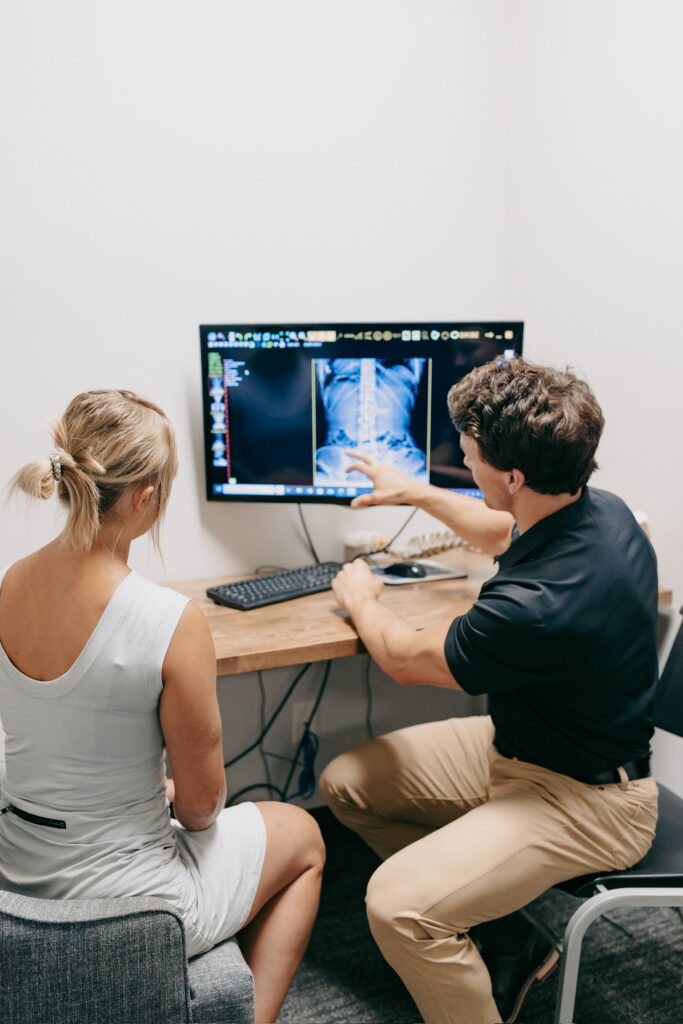
1. Address the nervous system and spinal structure first. If the spine is subluxated, if pelvic alignment is off, if the nervous system is in a chronic guarded state — mobility work on top of that is like painting over a water stain. You’ll see temporary results and then the restriction comes back. Getting spinal alignment assessed and corrected, addressing any pelvic asymmetry, and creating a nervous system environment that actually supports movement is the foundation everything else rests on.
2. Activate before you mobilize. Glute activation is the single most underutilized tool in hip mobility work. Before you try to stretch the front of the hip, make sure the back of the hip has the motor control to receive that range and hold it. Exercises like glute bridges, clamshells, and side-lying hip abduction aren’t just for rehabilitation — they’re neuromuscular education. They teach the brain to trust the joint.
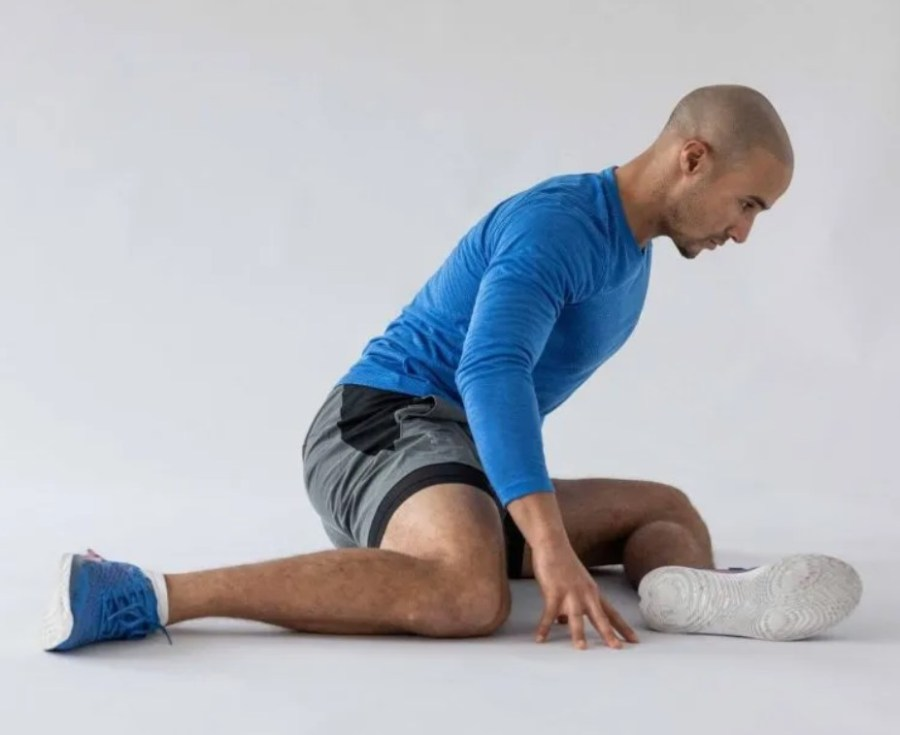
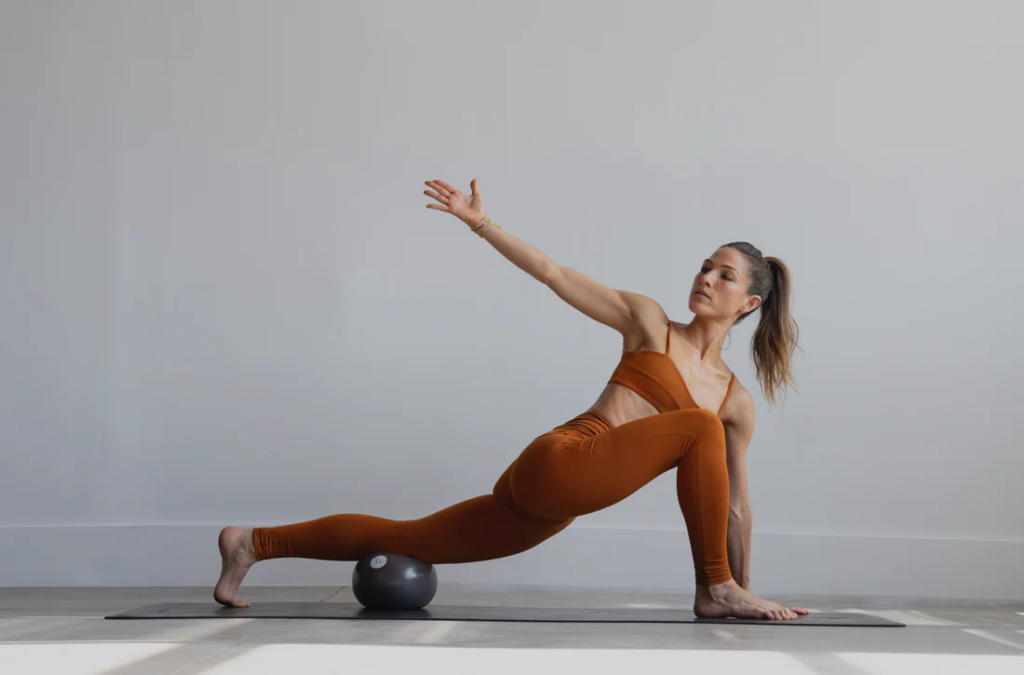
3. Then mobilize — actively. Passive stretching has its place, but active mobility work is significantly more effective for lasting change. The difference is this: passive stretching takes a tissue to its end range and holds it there. Active mobility work takes a joint to its end range under load — meaning the muscles have to actively produce and control that position. This is what builds real, usable range of motion. Hip 90/90 transitions, controlled articular rotations (CARs), active pigeon progressions, and deep squat work with active engagement are far more transferable to real movement than a static stretch held on the floor.
4. Load the new range. This is the step most people skip — and it’s why mobility gains often disappear. Once you’ve created access to new range of motion, you have to train in it. Romanian deadlifts, Bulgarian split squats, deep goblet squats, step-ups with a long stride — these exercises train the hip through ranges that daily life and standard gym programming often don’t reach. Loaded range of motion is what tells the brain: this is safe, this is useful, keep it.
5. Reduce the sitting load. No mobility program can fully overcome nine or ten hours a day of hip flexors in a shortened position. Break it up. Stand up every 30-45 minutes. Walk around the block after lunch. Take calls standing. These aren’t revolutionary recommendations — but they’re the unsexy, consistent behaviors that preserve what the more structured work creates.
The Holistic Layer: What Else Affects Hip Mobility
This is where I’d be doing you a disservice if I stopped at the physical.
Chronic emotional stress and elevated cortisol directly increase muscle tension — especially in the hip flexors and the psoas, which has deep connections to the nervous system’s threat response. The psoas is often called the “muscle of the soul” because it’s one of the primary muscles that contracts during a fight-or-flight response. People carrying chronic stress frequently carry it in their hips without realizing it.
Inflammation from diet — processed foods, refined oils, sugar — creates a systemic inflammatory environment that affects joint tissue, synovial fluid health, and overall movement quality. You can do all the right mobility work and still feel restricted if your internal chemistry is working against you.
Sleep is also part of this equation. Tissue repair, connective tissue remodeling, and the neurological consolidation of motor learning all happen during deep sleep. Poor sleep slows the rate at which mobility training actually converts to lasting structural and neural change.
This is exactly why the 5 Essentials matter even in the context of something as seemingly mechanical as hip mobility. It’s never just one thing.
A Simple Starting Point for This Week
If you’re not sure where to begin, here’s what I’d suggest:
→ Morning: 5 minutes of gentle hip CARs (controlled articular rotations) — slow, full circles in both directions while standing. This wakes up the joint, feeds it proprioceptive input, and sets the tone for how your nervous system maps that range for the rest of the day.
→ During the day: Set a timer to stand and take a short walk every 45 minutes. Not optional — this is your minimum viable movement.
→ Training days: Include at least one deep hip hinge (Romanian deadlift or similar) and one split stance movement (split squat, lunge variation) in your training. These two patterns alone cover a substantial portion of what the hip needs functionally.
→ Evening: 5-10 minutes of active floor work — 90/90 position with active transitions, hip flexor stretches with posterior pelvic tilt, and a deep squat hold with controlled breathing. This is when passive work is most appropriate — at the end of the day when the nervous system is less guarded.
And get your spine and pelvis assessed. Seriously. You can put in all the work on the floor and still hit a ceiling if the structural foundation isn’t aligned. That’s not a sales pitch — it’s just how the kinetic chain works.
The Bottom Line
Your hips are the center of your movement universe. They connect your lower body to your core, feed into how your spine loads and moves, and directly influence your quality of life in everything from how you walk across a parking lot to how you perform in the gym or on the field.
Mobility isn’t a luxury for athletes or a rehab tool for people who are broken. It’s a fundamental expression of how well your nervous system is communicating with your body, how well your structure is aligned, and how much you’re asking your tissues to do what they were designed for.
The good news is that this is highly trainable at any age, any fitness level, and any starting point. The body responds to intentional input. You don’t need to be perfect at this — you just need to be consistent.
You are one aJUSTINment away.
Dr. Justin Lee, D.C. Minnetonka Family Chiropractic | 11349 Highway 7, Minnetonka, MN 55305 952.229.8750 | drjustinlee.com
Videos to get you started:
Other Resources:
Easy starters:
https://www.fitnesseducation.edu.au/blog/health/5-exercises-to-increase-hip-mobility
https://blog.nasm.org/tips-for-hip-mobility-exercises-for-flexibility-performance
References
Gao, W., et al. (2024). Occupational sitting time, leisure physical activity, and all-cause and cardiovascular disease mortality. JAMA Network Open, 7(1). PMC10799265
Khurshid, S., et al. (2024). Sedentary time and cardiovascular outcomes. Journal of the American College of Cardiology. AHA 2024.
Journal of Physical Therapy Science (2020). Hip mobility and low back pain correlation.
Journal of Orthopaedic & Sports Physical Therapy (2021). Decreased hip mobility in chronic low back pain patients.
Malai, S., et al. Correlation between flexibility of hip muscles, pain and disability in chronic nonspecific low back pain. ClinicalTrials.gov NCT07099768
PMC12110692 (2025). Impact of hip exercises on postural stability in chronic lower back pain patients.
Dr. Justin Lee, D.C.
Doctor of Chiropractic & Holistic Health
Dr. Justin Lee is a passionate chiropractor who believes in the innate healing potential within you. This passion stems from a personal experience in collegiate hockey, competitive CrossFit, and a relentless pursuit to holistically optimize performance and recovery. His professional mission is to help as many individuals and families as possible uncover the path to true health. He is dedicated to guiding them on how to integrate lifestyle changes for a sustainable and healthier future. All of which shapes his unique approach to personalized chiropractic care.
You are one ‘aJUSTINment’ away from a healthier life.

get to know me

