Dr.'s Blog
She Ran 13.1 Miles on Plantar Fasciitis – Here’s How We Got Her Body Ready
May 5, 2026

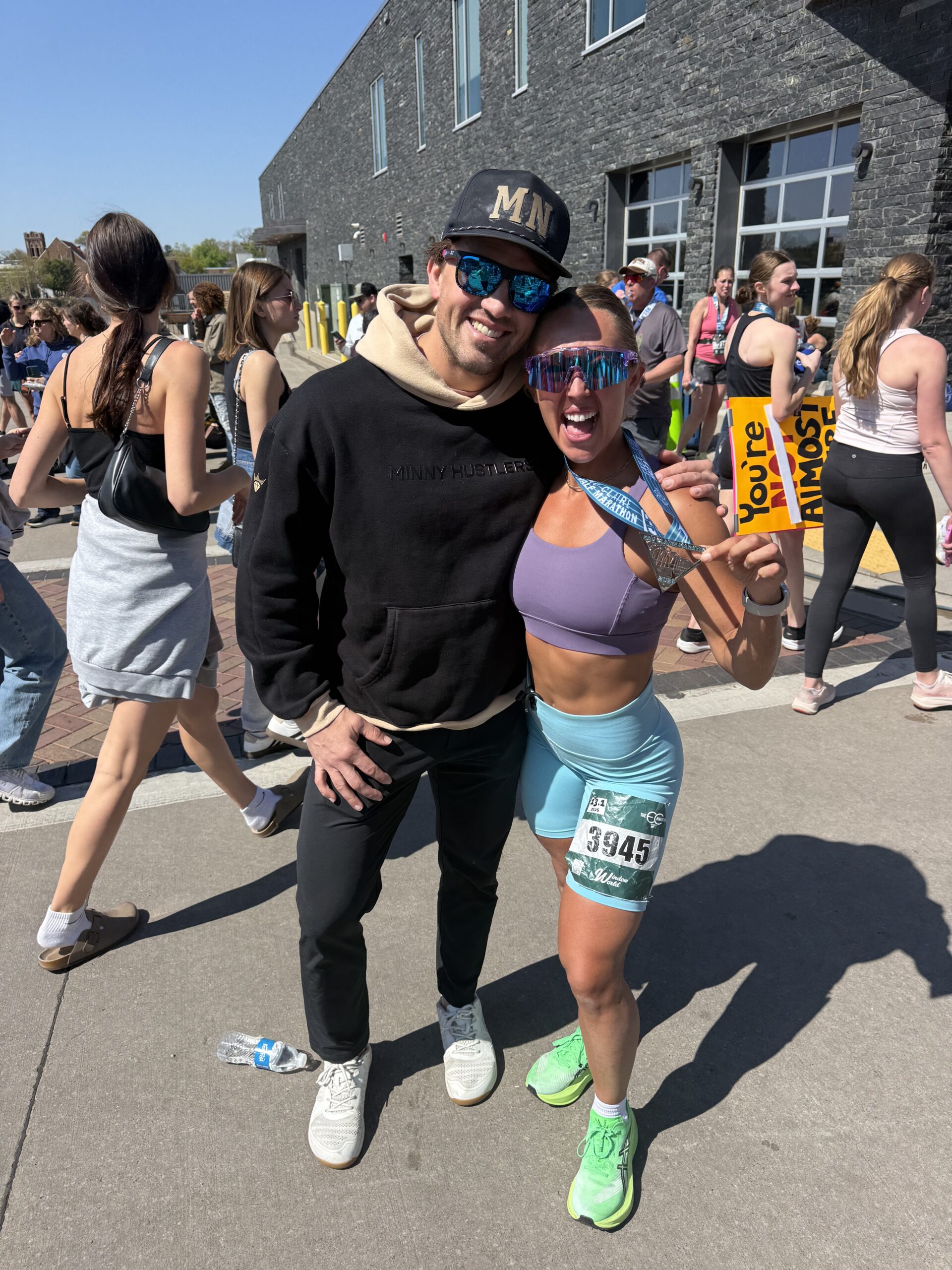
This past weekend, I watched my girlfriend crush a half marathon in Eau Claire, Wisconsin.
13.1 miles. PERFECT weather: 50s and sunny. Little humidity. She ran strong, felt good, and finished with a smile on her face.
And honestly? Watching people commit to something like this never gets old.
Why I Love Watching People Do Hard Things (And What It Takes to Actually Show Up Ready)
The Thing About Half Marathons (And Hard Goals in General)
Here’s what I love about watching someone train for and complete a half marathon: it’s not about the race day. Race day is just the final expression of months of work.
The real story is everything that happened before that starting line. The early morning runs when it’s 20 degrees outside and still dark. The 10-mile training runs when your body is screaming at you to stop. The discipline of showing up consistently – even when you don’t feel like it, even when it’s uncomfortable, even when progress feels slow.
That’s the part most people don’t see. And that’s the part that matters most.
My girlfriend didn’t just decide to run a half marathon and hope for the best. She trained consistently. She put in the miles. She stuck to a plan even when it was hard.
And that commitment – that willingness to do uncomfortable things over and over again because you’re working toward something bigger – that’s what I find incredible about people who chase goals like this. It’s not just about running. It’s about showing yourself that you’re capable of more than you thought.

But Here’s What A Lot of People Miss…
You can put in all the miles you want. You can follow the perfect training plan. You can have the best running shoes, the fanciest GPS watch, and all the motivation in the world.
But if you’re not taking care of your body, you’re not going to make the progress you’re capable of.
And honestly? A lot of runners skip this part. They focus on volume. They focus on pace. They focus on hitting their weekly mileage. But they ignore sleep, nutrition, recovery, stress management, and addressing mechanical issues before they become injuries. And then they wonder why they hit a wall. Why progress stalls. Why nagging injuries won’t go away.
What Actually Supported Her Training
My girlfriend did something most people don’t do. She didn’t just train hard. She took care of her body. This … might seem obvious… but putting it into practice is a whole different story!! This is where most fall short.
Sleep Was Non-Negotiable
She worked on improving her sleep schedule and actually prioritizing rest. And this matters more than most people realize.
Research shows that sleep deprivation impairs athletic performance in multiple ways. You fatigue faster because your time to exhaustion decreases. Your muscles don’t refuel properly because glycogen synthesis is impaired. Your reaction time and cognitive function decline. Your injury risk increases due to poor motor control. And your cortisol levels spike, which directly impairs recovery.
A study in the Journal of Sports Sciences found that athletes who slept less than 8 hours per night had a 1.7x higher injury rate compared to those who slept 8+ hours. You can’t out-train poor sleep. Your body repairs tissue, consolidates motor patterns, and rebalances hormones during sleep. Skip that, and you’re sabotaging your own progress.

Nutrition Was Dialed In
She ate well. Real food. Enough protein. Enough carbs to fuel training. Enough fat for hormone production and cellular function. Not restrictive. Not obsessive. Just consistent, quality nutrition.
Here’s why that matters: Endurance training creates significant metabolic demands. Your body needs carbohydrates to restore muscle glycogen, protein to repair muscle tissue damage from repetitive impact, omega-3 fatty acids to modulate inflammation, and micronutrients like iron, magnesium, and B vitamins to support energy metabolism.
A study in Nutrients (2019) found that runners with inadequate protein intake experienced significantly slower recovery times and higher rates of overuse injuries. You can’t run 30+ miles per week on junk food and expect your body to adapt properly.
Stress Management and Balance
She didn’t just pile training on top of an already chaotic life. She worked on living more balanced. Managing stress. Not letting everything else compound on top of the physical demands of training.
This is huge. Chronic psychological stress elevates cortisol, which impairs tissue repair, suppresses immune function, disrupts sleep quality, increases systemic inflammation, and reduces glycogen storage. A stressed nervous system is a nervous system stuck in sympathetic overdrive. And when your body is in fight-or-flight mode 24/7, it can’t heal properly.
Training is a stressor. Life is a stressor. If you don’t manage the total stress load, your body breaks down.
The Plantar Fasciitis Problem (And How We Fixed It)
Here’s where things got real. A few weeks before the race, old plantar fasciitis and foot issues started flaring up. This was limiting how hard she could train.
Plantar fasciitis isn’t just annoying foot pain. When your foot isn’t functioning properly, it creates a cascade of compensation patterns. Your gait mechanics get altered. There’s increased stress on the Achilles tendon. Your hips and lower back start compensating. You lose push-off power. Your pace slows and your stride shortens.
She pushed through it for a while. But the week before the race, during her final 10-mile training run, she had pretty significant lower back issues. Running felt restricted. Uncomfortable. Her low back was locking up. That’s a compensation pattern – the foot issue was creating mechanical stress all the way up the kinetic chain.
SoftWave to the Rescue
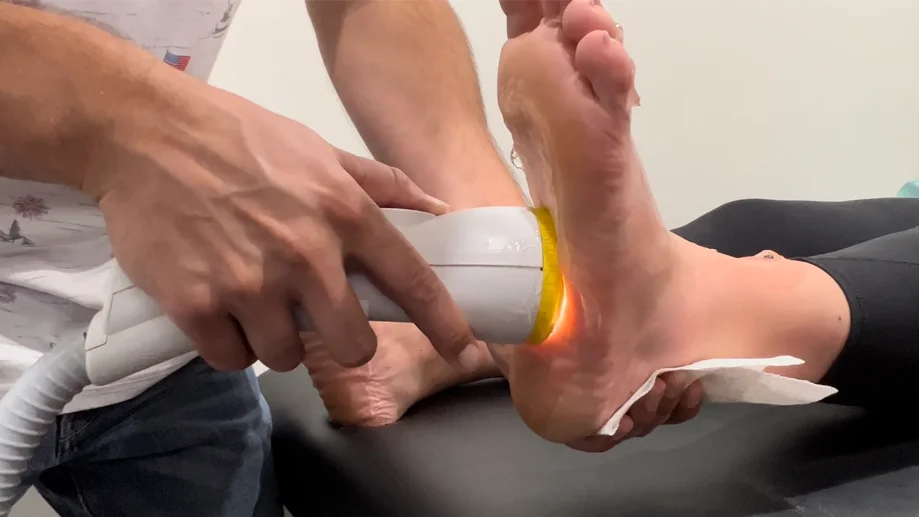
We finally got her in for SoftWave therapy the day before the race. Yes, the day before.
SoftWave uses electrohydraulic shockwave technology to stimulate blood flow to injured tissue (plantar fascia has notoriously poor circulation), activate tissue repair pathways at the cellular level, reduce neurogenic inflammation and pain signaling, and break down scar tissue and adhesions.
One session. 20 minutes. Targeted to the plantar fascia and the tight, restricted tissue causing the issue.
And it made a massive difference. She was able to run the entire half marathon without debilitating pain. She noticed some tension and discomfort – which is normal given the mileage and the fact that we were addressing a chronic issue – but it wasn’t limiting. She felt comfortable. She ran strong. She finished without her foot or back breaking down on her.
That’s the difference between managing symptoms and actually addressing tissue quality.
Adjustments to Restore Function
We also got her adjusted and ready for race day. When your lower back is locked up and restricted, it’s not just “tight muscles.” It’s altered joint mechanics, compensatory muscle firing patterns, reduced spinal mobility, and impaired nervous system communication.
Chiropractic adjustments restore proper spinal motion and improve nervous system function. Research has shown that spinal adjustments can improve joint position sense (proprioception), enhance muscle activation patterns, increase range of motion, reduce pain perception, and improve autonomic nervous system balance (heart rate variability).
A study in the Journal of Manipulative and Physiological Therapeutics found that athletes who received chiropractic care showed improved athletic performance markers including jump height, agility, and power output. We weren’t just “cracking her back.” We were restoring proper biomechanical function so her body could move the way it’s supposed to.
Race Day: Eau Claire Half Marathon 2026
Perfect weather. Sunny. 50 degrees. Ideal running conditions.
She ran strong. She felt good. No major issues. No breakdown.
And that’s what preparation looks like. Not hoping your body holds together. Knowing it will – because you did the work to support it.
We even got to stay downtown and explore Eau Claire a little bit after the race. Made a whole trip out of it. Those are the moments that make it worth it.
Why This Matters Beyond Running
This isn’t just a story about a half marathon. It’s about what happens when you take care of your body instead of just beating it into submission.
A lot of people approach training – and life – like this: Push hard. Ignore pain. Power through. Hope it holds together. And sometimes it works. For a while. But eventually, compensation patterns catch up. Tissue breaks down. Performance plateaus. Injuries pile up.
The smarter approach? Train hard. But also prioritize sleep and recovery, fuel your body with quality nutrition, manage stress and nervous system load, address mechanical issues before they become injuries, and use tools like chiropractic care and SoftWave therapy to optimize function and accelerate healing.
This applies to runners. CrossFit athletes. Weightlifters. Hockey players. Anyone pushing their body to perform. Your body has an incredible capacity to adapt and perform at a high level. But only if you give it what it needs to actually do that.
The Gimmicks vs. The Fundamentals
Here’s the reality: the health and fitness industry is full of gimmicks. Magic supplements. Biohacking gadgets. Recovery boots. Cryotherapy chambers. The newest trendy workout program.
None of that matters if you’re ignoring the fundamentals. Sleep. Nutrition. Stress management. Proper movement mechanics. Nervous system function. Those are the non-negotiables. Everything else is just optimization on top of a solid foundation.
Statistics back this up: A 2018 study in Sports Medicine found that sleep extension (increasing sleep to 9-10 hours) improved sprint times, shooting accuracy, reaction time, and overall athletic performance across multiple sports. Another study in the British Journal of Sports Medicine showed that athletes with poor nutrition had 2x higher injury rates compared to those with adequate nutrient intake. And research in Spine demonstrated that chronic lower back pain in athletes was significantly improved with chiropractic care – reducing pain and improving function better than standard medical care alone.
The fundamentals work. The gimmicks are optional.
Final Thoughts
Watching my girlfriend cross that finish line was awesome. Not because running 13.1 miles is inherently impressive (though it is). But because I got to watch someone commit to something hard, show up consistently, take care of their body properly, and execute on race day.
That’s what I love about this work. Helping people do the hard things they want to do – without their body breaking down in the process. Whether that’s running a half marathon, competing in CrossFit, playing with your kids without pain, or just living your life without limitation.
Your body is designed to perform at a high level. It’s designed to adapt, to heal, to get stronger. But only if you support it properly. Train hard. But also sleep well. Eat well. Manage stress. Address mechanical dysfunction. Remove nervous system interference.
That’s how you show up ready. And that’s why we do what we do.
If you’re training for something – a race, a competition, a performance goal – and your body isn’t holding up the way it should, let’s talk. We can help you address the mechanical issues, optimize nervous system function, and support your body so it can actually do what you’re asking it to do.
Dr. Justin Lee, DC
Minnetonka Family Chiropractic
Minnetonka, MN
(612) 470-9210
drjustinlee.com
References
Milewski MD et al. Chronic lack of sleep is associated with increased sports injuries in adolescent athletes. J Pediatr Orthop. 2014.
Mah CD et al. The effects of sleep extension on athletic performance. Sleep. 2011.
Thomas DT et al. Position of the Academy of Nutrition and Dietetics: Nutrition and athletic performance. J Acad Nutr Diet. 2016.
Haavik H, Murphy B. The role of spinal manipulation in addressing disordered sensorimotor integration and altered motor control. J Electromyogr Kinesiol. 2012.
Miners AL. The diagnosis and conservative treatment of plantar fasciitis. J Can Chiropr Assoc. 2010.
Dr. Justin Lee, D.C.
Doctor of Chiropractic & Holistic Health
Dr. Justin Lee is a passionate chiropractor who believes in the innate healing potential within you. This passion stems from a personal experience in collegiate hockey, competitive CrossFit, and a relentless pursuit to holistically optimize performance and recovery. His professional mission is to help as many individuals and families as possible uncover the path to true health. He is dedicated to guiding them on how to integrate lifestyle changes for a sustainable and healthier future. All of which shapes his unique approach to personalized chiropractic care.
You are one ‘aJUSTINment’ away from a healthier life.

get to know me

